The post First Aid Myths That Could Cost Lives: Debunking Misconceptions appeared first on Online Health & Safety Training Courses | ProTrainings Europe.
]]>When it comes to first aid, everyone seems to have heard a “rule” passed down from a friend, a film, or a well-meaning relative. But while these tips might sound helpful, some of them could actually cause more harm than good.
Let’s clear up some of the most common first aid myths — and explain what you should do instead.

Myth 1: “Never give water to someone having a seizure.”
This is one of the most widespread misconceptions. People often think that someone having a seizure might choke if given water, or that giving them a drink could somehow “wake them up”.
💡 The truth:
You should never try to give someone anything to eat or drink while they’re having a seizure — but that’s because they can’t safely swallow, not because water is inherently dangerous.
During a seizure:
- Move nearby objects out of the way to prevent injury.
- Loosen tight clothing around their neck.
- Don’t restrain them or put anything in their mouth.
- Once the seizure stops and they’re fully awake, you can offer them water to sip if they’d like it.
👉 The key is to wait until they’re fully conscious and aware before giving them anything to drink.
Myth 2: “If someone is bleeding, always elevate the wound.”
This advice used to be common in older first aid books — but guidance has changed.
💡 The truth:
The most effective way to stop bleeding is direct pressure on the wound. Elevating the limb isn’t harmful, but it shouldn’t be your main focus. If the wound is bleeding heavily, you need to:
- Apply firm, continuous pressure using a clean pad or dressing.
- Keep pressure on until the bleeding stops or help arrives.
- If the pad soaks through, add another layer rather than removing the first.
👉 Elevation alone won’t stop bleeding, but firm pressure often will.
Myth 3: “You must wait for paramedics before you do anything.”
Many people hesitate to act, worried they might make things worse or get into trouble. But in a medical emergency, doing something is almost always better than doing nothing.
💡 The truth:
The minutes before emergency services arrive are often the most critical.
- Start CPR immediately if someone isn’t breathing normally.
- Use an AED if one’s available — you can’t shock someone who doesn’t need it.
- Stop bleeding with pressure.
- Roll an unconscious but breathing person onto their side.
👉 Simple actions save lives. Paramedics would always rather arrive to find you’ve started helping.
Myth 4: “First aid for adults is the same as for children or pets.”
It’s easy to assume first aid is “one size fits all”, but that’s far from true. Children and pets have smaller bodies, faster heart rates, and different risks.
💡 The truth:
- Children and babies: Their airways are more delicate, so techniques like CPR and choking response must be gentler and adapted for their size.
- Pets: Dogs and cats can choke, overheat, or be poisoned, but their anatomy and reactions differ from ours. Even the best human first aid technique might not apply.
👉 If you live with children or animals, it’s worth taking a specific paediatric or pet first aid course to learn how to help safely.
Why busting myths matters
When someone’s life is at risk, hesitation or outdated advice can make a critical difference. The more people understand accurate, modern first aid, the safer our communities become.
If it’s been a while since your last training, or if these myths surprised you, it might be time for a refresher.
👉 Explore our range of first aid and CPR courses at www.protrainings.uk/courses — including paediatric, workplace, and pet first aid options.
Because the best first aiders don’t just act fast — they act right.
The post First Aid Myths That Could Cost Lives: Debunking Misconceptions appeared first on Online Health & Safety Training Courses | ProTrainings Europe.
]]>The post Preparing for Medical Emergencies in Schools: What Teachers and Staff Need to Know appeared first on Online Health & Safety Training Courses | ProTrainings Europe.
]]>Schools are busy environments where children are constantly on the move, learning, playing, and exploring. While this energy and enthusiasm are part of what makes schools so vibrant, it also means that accidents and medical emergencies can — and do — happen. Whether it’s a playground fall, an asthma attack, or an allergic reaction, every second counts. Being properly prepared can make all the difference.
Understanding Your Legal Responsibilities
Schools have a duty of care to their pupils. This includes taking reasonable steps to prevent foreseeable harm and to respond effectively in the event of a medical emergency. The Health and Safety (First-Aid) Regulations 1981 require employers, including schools, to provide adequate and appropriate first aid equipment, facilities, and trained personnel.
While not every member of staff needs to be a qualified first aider, it’s essential that there are enough trained individuals on site to deal with emergencies promptly. Schools should also carry out risk assessments to determine the level of first aid cover required — taking into account pupil numbers, age ranges, and specific health needs.
Common School Emergencies and How to Respond
Asthma Attacks
Asthma is one of the most common long-term medical conditions in children. An asthma attack can come on suddenly, so it’s vital that staff know the signs: coughing, wheezing, shortness of breath, or difficulty speaking in full sentences.
If a pupil is having an asthma attack:
- Help them use their reliever inhaler (usually the blue one).
- Encourage them to sit upright and stay calm.
- If symptoms don’t improve after 10 puffs or they worsen, call 999 immediately.
Schools are legally allowed to hold a spare reliever inhaler for emergencies, provided parental consent and appropriate policies are in place.
Severe Allergic Reactions (Anaphylaxis)
Food allergies are increasingly common, and anaphylaxis can be life-threatening. Signs include swelling, difficulty breathing, or collapse.
If this occurs:
- Use the pupil’s adrenaline auto-injector (EpiPen or similar) straight away.
- Call 999 and tell them it’s anaphylaxis.
- If symptoms don’t improve within 5 minutes and another auto-injector is available, administer a second dose.
Schools can keep a spare adrenaline auto-injector on site, again with written consent and policies in place.
Injuries and Accidents
From playground tumbles to sports injuries, minor cuts and bruises are part of school life. However, staff must also be ready to respond to more serious incidents such as:
- Head injuries – always monitor closely and seek medical advice if there’s vomiting, drowsiness, or confusion.
- Broken bones or sprains – keep the injured area still and supported until help arrives.
- Bleeding – apply direct pressure with a clean dressing and, if serious, call for emergency assistance.
Accident report forms should be completed for all incidents, no matter how small, and parents or guardians should always be informed.
Best Practice for Schools
- Regular Training: Ensure that all staff receive first aid training appropriate to their role. Consider additional paediatric first aid training for those working with younger pupils.
- Emergency Plans: Display clear instructions throughout the school and make sure staff know how to contact emergency services and where to find first aid kits and defibrillators.
- Communication: Keep up-to-date records of pupils’ medical conditions and emergency contacts. Ensure cover staff and volunteers are briefed.
- Practice Drills: Conduct regular emergency simulations — for example, mock asthma attacks or allergic reactions — so staff remain confident and calm under pressure.
- First Aid Equipment: Maintain well-stocked first aid kits in key locations, including the playground, gym, and staffroom.
Building Confidence Through Training
Even the most experienced teachers can feel anxious in a medical emergency — and that’s perfectly natural. The key to overcoming that hesitation is practical, hands-on training that builds confidence and readiness.
At ProTrainings, we offer a range of first aid courses tailored for schools and childcare settings, including Paediatric First Aid, Basic Life Support, and First Aid at Work. These courses give staff the skills and confidence to act quickly and effectively when it matters most.
Every child deserves a safe learning environment — and every school deserves a team that’s ready for anything.
Learn more about first aid courses for schools at www.propaediatric.co.uk.
The post Preparing for Medical Emergencies in Schools: What Teachers and Staff Need to Know appeared first on Online Health & Safety Training Courses | ProTrainings Europe.
]]>The post Micro-Moments That Save Lives: Everyday First Aid Tips You Can Do in 60 Seconds appeared first on Online Health & Safety Training Courses | ProTrainings Europe.
]]>Everyday First Aid Tips You Can Do in 60 Seconds
Introduction
Emergencies can happen at any time—at home, at work, or even on the street. Often, it’s the small, immediate actions that make the biggest difference before professional help arrives. You don’t need to be a medical expert to save a life; sometimes just 60 seconds of the right action is enough. Here are some quick, practical first aid tips you can use in everyday situations.
1. Stop the Bleed
If someone is bleeding heavily, time is critical. Even a minute of direct pressure can prevent life-threatening blood loss.
What to do:
- Apply firm pressure directly to the wound with a clean cloth or your hand.
- Elevate the injured area if possible.
- Keep pressure constant until help arrives.
2. Choking Response
Choking can escalate fast, especially with children or the elderly. A swift intervention can be lifesaving.
What to do:
- Encourage the person to cough if they can.
- If ineffective, perform back blows or the abdominal thrusts technique (Heimlich manoeuvre).
- Call 999 if the blockage doesn’t clear immediately.
3. Burn Care Basics
Burns are common at home, from cooking to hot drinks. Quick cooling reduces damage and pain.
What to do:
- Run the burn under cool running water for 20–30 seconds.
- Avoid ice or butter—it can worsen the injury.
- Cover with a clean, non-fluffy cloth and seek medical help if severe.
4. Managing a Nosebleed
Nosebleeds can be alarming but are usually manageable at home.
What to do:
- Sit upright and lean forward slightly—don’t tilt your head back.
- Pinch the soft part of your nose for 10–15 minutes without releasing.
- Apply a cold compress to the bridge of the nose to reduce bleeding.
5. Recognising a Heart Attack
Every second counts with a heart attack. Early recognition can save a life.
What to do:
- Look for chest pain, shortness of breath, or discomfort in the arms, neck, or jaw.
- Call 999 immediately—don’t wait to see if symptoms pass.
- While waiting, help the person sit comfortably and stay calm.
6. Simple CPR Steps
Knowing even the basics of CPR can dramatically improve survival rates in cardiac arrest.
What to do:
- Place the heel of your hand on the centre of the chest.
- Push hard and fast, about 100–120 compressions per minute, allowing the chest to rise fully.
- Continue until help arrives or the person regains consciousness.
7. Allergic Reaction Awareness
Severe allergic reactions can develop suddenly. Quick action is vital.
What to do:
- Recognise symptoms: swelling, difficulty breathing, hives, or vomiting.
- If the person has an adrenaline auto-injector (EpiPen), assist them in using it immediately.
- Call 999—even if symptoms improve, medical assessment is crucial.
Conclusion
Everyday first aid doesn’t require hours of training or complicated tools. By mastering these micro-moments, you can make a real difference when seconds count.
Remember, the best first aid is a combination of knowledge, calmness, and action. Even small gestures—like applying pressure to a wound, helping someone sit during a heart episode, or starting CPR—can save a life.
Pro Tip: Take a first aid course to build confidence and learn even more life-saving techniques. ProTrainings UK offers practical, hands-on courses for individuals and workplaces. Find out more at www.protrainings.uk
The post Micro-Moments That Save Lives: Everyday First Aid Tips You Can Do in 60 Seconds appeared first on Online Health & Safety Training Courses | ProTrainings Europe.
]]>The post First Aid for Children and Babies: Understanding the Differences and Common Emergencies appeared first on Online Health & Safety Training Courses | ProTrainings Europe.
]]>First aid isn’t one-size-fits-all. Babies and children are physiologically different from adults, and their bodies respond differently in an emergency. Understanding these differences is essential for providing safe, effective first aid and acting quickly when it matters most.
Why First Aid for Children and Babies is Different
Babies and children have smaller airways, faster heart rates, and unique developmental needs. Because of this:
- Symptoms of illness or injury can present differently to adults.
- They can deteriorate more quickly if not treated promptly.
- First aid techniques often need to be adapted in terms of size, pressure, and approach.
Being aware of these differences helps first aiders provide the correct care and avoid accidental harm.
Common Emergencies by Age Group
Infants (0–12 months)
- Choking: Babies explore the world by putting objects in their mouths. Learn infant choking relief, including back blows and chest thrusts.
- Fevers: Babies can develop high temperatures quickly. Seek medical advice if a baby under three months has a temperature of 38°C or higher.
- Falls & Head Injuries: Even minor falls can be serious. Watch for vomiting, drowsiness, or unusual behaviour.
Toddlers and Young Children (1–5 years)
- Cuts and Grazes: Active little ones often pick up scrapes and cuts. Clean wounds and apply appropriate dressings.
- Burns & Scalds: Hot drinks and kitchen accidents are common. Cool the area under running water for at least 20 minutes.
- Choking & Breathing Difficulties: Small toys and food pieces can block airways. Know the correct first aid techniques for this age group.
Primary-Age Children (6–12 years)
- Sports Injuries: Sprains, strains, and bruises are common. Know the RICE method (Rest, Ice, Compression, Elevation) and when to seek medical attention.
- Asthma & Allergic Reactions: Children may have asthma attacks or severe allergic reactions. Be familiar with inhalers and EpiPen use.
- Serious Illness: Persistent vomiting, high temperatures, or lethargy require prompt medical attention.
Teenagers (13–18 years)
- Accidents & Trauma: Teens may be more prone to serious injuries from sports, cycling, or outdoor activities.
- Mental Health Concerns: Stress, anxiety, and self-harm risks can emerge. Recognising early warning signs and supporting them appropriately is important.
Key Differences in First Aid Techniques
- CPR: Infant CPR differs from child CPR in compression depth, hand placement, and breath ratio.
- Choking Relief: Babies require gentle back blows and chest thrusts; older children may require abdominal thrusts.
- Medication and Dosage: Never give adult medication unless specifically advised. Age-appropriate dosing is essential.
Safety Tips for Parents and Carers
- Keep a first aid kit accessible and suitable for children.
- Learn age-specific first aid techniques through accredited training courses.
- Stay calm and reassuring — children respond to your tone and confidence.
- Call 999 if in doubt, or if the child shows signs of severe distress, difficulty breathing, or loss of consciousness.
Paediatric First Aid Courses by ProTrainings
At ProTrainings, we offer comprehensive paediatric first aid training tailored to those caring for children and infants. Our courses are designed to equip you with the essential skills and knowledge to respond effectively in emergencies.
Course Options:
- TQUK Level 3 Award in Paediatric First Aid (RQF): A regulated qualification covering a wide range of scenarios, from CPR to handling minor injuries and medical emergencies. This course meets the requirements set by Ofsted and the Early Years Foundation Stage (EYFS), making it ideal for those working in childcare settings.
- Paediatric 12-Hour First Aid Level 3 (VTQ): A comprehensive course that covers life-saving skills and emergency response techniques. This qualification is recognised by Ofsted and is suitable for childminders, nannies, and other childcare professionals.
- Paediatric First Aid for Nannies and Au Pairs: Tailored training for those responsible for the care of young children, covering vital topics such as CPR, choking, and managing minor injuries. Fully compliant with Ofsted and EYFS guidelines.
Flexible Learning Options:
- Blended Learning: Start with online modules at your own pace, followed by a practical classroom session with one of our accredited instructors. This flexible approach saves you time while ensuring you gain the necessary skills.
- Classroom Training: Participate in face-to-face sessions led by experienced instructors, providing hands-on practice and real-life scenarios to build your confidence.
Upon successful completion of our courses, you’ll receive a recognised certificate, affirming your ability to provide crucial care when it matters most.
To learn more about our paediatric first aid courses and to find a training option that suits your needs, visit ProPaediatric.
Final Thoughts
Children and babies are not just small adults — their bodies, needs, and reactions in emergencies are unique. Being prepared with the right knowledge and skills can save lives and reduce the severity of injuries.
Investing in paediatric first aid training ensures that, whether at home, school, or elsewhere, you can respond effectively and confidently when a child needs help.
The post First Aid for Children and Babies: Understanding the Differences and Common Emergencies appeared first on Online Health & Safety Training Courses | ProTrainings Europe.
]]>The post Legal Implications of First Aid Errors in the Workplace: What Employers & Individuals Need to Know appeared first on Online Health & Safety Training Courses | ProTrainings Europe.
]]>Providing first aid at work is not only a moral responsibility, but also a legal one. Employers have a duty of care to ensure that staff are kept safe and that adequate provision is in place should an accident or medical emergency occur. But what happens if something goes wrong? What if first aid is mis-applied, or if an employee makes a mistake while trying to help?
This article explores the legal landscape surrounding first aid errors in the workplace, the responsibilities of employers and individuals, and how proper training can reduce risk.
Employer Duties Under Health and Safety Law
UK law is clear: under the Health and Safety (First-Aid) Regulations 1981, employers must provide “adequate and appropriate” first aid equipment, facilities, and personnel. This does not always mean a full-time first aider is required, but it does mean that the risks of the workplace must be assessed and provisions matched accordingly.
Employers must ensure:
- The workplace has suitable first aid kits and equipment.
- First aiders (where required) are properly trained and hold recognised qualifications.
- Staff are informed about procedures and know how to summon help.
Failure to meet these requirements can lead to enforcement action, fines, or prosecution if an employee is harmed due to lack of provision.
What Happens if First Aid Is Mis-Applied?
Mistakes can happen, especially in stressful situations. Common concerns include:
- Incorrect treatment (for example, applying the wrong dressing or performing CPR incorrectly).
- Delay in seeking professional help if first aid continues when urgent medical attention is required.
- Aggravating an injury through well-intentioned but inappropriate action.
In most cases, individuals who attempt first aid in good faith are unlikely to face personal legal liability. Courts recognise that first aiders are not doctors and cannot be expected to deliver care to the same standard. The expectation is that they act reasonably, in line with their training and ability.
Liability and Insurance Considerations
Where an error does occur, questions of liability usually fall to the employer rather than the individual. If a trained workplace first aider acts within the scope of their training, any claim would normally be handled through the company’s employer liability insurance.
Employers must therefore ensure they have:
- Adequate insurance cover in place for workplace incidents.
- Records of first aid risk assessments and staff training.
- A system for incident reporting and review.
For individuals, especially those volunteering as first aiders, protection often comes under the umbrella of the employer’s duty of care and insurance.
Risk Management Through Training
The best way to reduce the chance of first aid errors—and legal consequences—is through quality training and regular refreshers. Well-trained staff are more confident, more accurate in their response, and less likely to hesitate when it matters most.
Key points include:
- Ensuring all appointed first aiders hold up-to-date qualifications.
- Providing refresher courses at the recommended intervals.
- Encouraging a culture where staff are supported, not criticised, for stepping in to help.
- Documenting all training for compliance and audit purposes.
Training also gives first aiders a clear understanding of their boundaries: when to act, when to stop, and when to escalate to professional emergency services.
The Bigger Picture: Support and Reassurance
While the legal side is important, it should not discourage people from stepping in to help. The law is designed to protect well-intentioned first aiders, not punish them. Employers who provide robust training, proper equipment, and a supportive environment are not only meeting legal requirements—they are also empowering their staff to respond confidently when someone’s life may depend on it.
✅ In summary:
- Employers must comply with the First-Aid Regulations 1981.
- First aiders acting in good faith are rarely held personally liable.
- Adequate insurance, policies, and training are vital for protection.
- Regular training mitigates risks and gives staff confidence.
First aid errors can have serious consequences, but with the right preparation, they can be minimised—and lives can be saved.
The post Legal Implications of First Aid Errors in the Workplace: What Employers & Individuals Need to Know appeared first on Online Health & Safety Training Courses | ProTrainings Europe.
]]>The post Post Incident Support: What Happens After Delivering First Aid appeared first on Online Health & Safety Training Courses | ProTrainings Europe.
]]>When we think about first aid, most of us picture bandages, CPR, or calling 999. But there’s another side to responding in an emergency that is often overlooked: the emotional impact on the person who gave the help. Delivering first aid can be a deeply stressful experience, especially if the situation was serious or life-threatening.
The Hidden Impact of First Aid
Even when you act quickly and do everything right, it’s normal to feel shaken afterwards. You may replay the event in your mind, wonder if you could have done more, or feel responsible for the outcome. These thoughts are natural but can sometimes lead to stress or feelings of guilt.
Some people may notice:
- Difficulty sleeping or vivid dreams about the event
- A sense of anxiety in similar situations
- Feeling emotional or unusually irritable
- Avoiding places or reminders of the incident
These are common responses to witnessing or being involved in an emergency, and they don’t mean you are weak or did something wrong. They simply reflect that the experience was intense and outside of everyday life.
The Importance of Talking
One of the most effective ways to process what happened is to talk about it. Sharing your experience with a trusted colleague, friend, or family member can help put events into perspective. In workplace settings, many employers have peer support networks or access to employee assistance programmes (EAPs) that provide confidential counselling.
If you responded as part of a team, don’t underestimate the value of speaking with others who were there. They will understand the situation in a way others may not, and it can be reassuring to know you are not alone in how you feel.
Professional Support
If distress continues beyond a few days, or if the impact is interfering with daily life, professional help is recommended. Your GP can refer you to talking therapies, and charities such as Mind, Samaritans, or PTSD UK offer resources and support lines. For those in emergency or healthcare roles, organisations like The Blue Light Programme (from Mind) focus specifically on the needs of responders.
Looking After Yourself
There are also simple steps you can take to support your recovery after a difficult incident:
- Rest and routine – try to maintain regular sleep and eating patterns.
- Movement – light exercise, like walking, can ease stress.
- Avoid bottling it up – writing down your feelings can sometimes help when talking feels too much.
- Stay connected – spending time with others can reduce feelings of isolation.
Remember: You Made a Difference
In moments of crisis, you stepped forward when it mattered. That is something to be proud of. The outcome of a medical emergency does not always lie in your hands, but your actions gave someone a better chance and offered reassurance in their most vulnerable moment.
Supporting yourself after giving first aid is just as important as the first aid you provided. By recognising the emotional impact and reaching out for help when needed, you ensure that you can continue to be there for others — and for yourself.
The post Post Incident Support: What Happens After Delivering First Aid appeared first on Online Health & Safety Training Courses | ProTrainings Europe.
]]>The post MHRA Approves First Needle-Free Adrenaline Nasal Spray for Anaphylaxis in the UK appeared first on Online Health & Safety Training Courses | ProTrainings Europe.
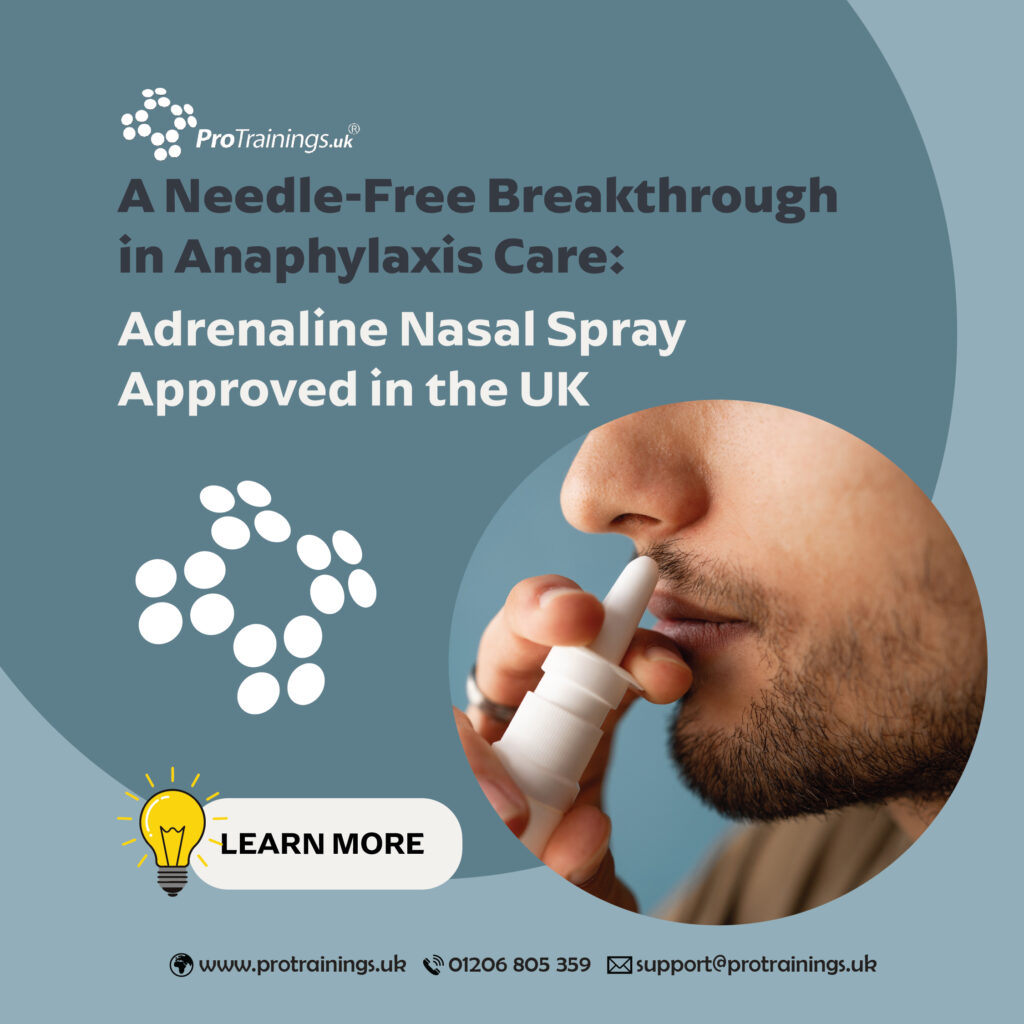
]]>On 18 July 2025, the Medicines and Healthcare products Regulatory Agency (MHRA) approved a major breakthrough in allergy care: the adrenaline (epinephrine) nasal spray, EURneffy.
This is the first-ever needle-free treatment for anaphylaxis in the UK, giving patients and carers an alternative to traditional adrenaline auto-injectors.
What is Anaphylaxis?
Anaphylaxis is a severe, sudden, and sometimes life-threatening allergic reaction.
It can cause:
- A dangerous drop in blood pressure
- Difficulty breathing
- The need for immediate emergency treatment
Adrenaline has long been the standard treatment. Until now, it has only been available through auto-injectors like the EpiPen.
Why This Approval Matters
The introduction of a nasal spray makes emergency treatment more accessible, especially for people who may struggle to use a needle in a crisis.
Key points:
- Suitable for adults and children over 30kg (about 66 pounds)
- Provides a full 2mg dose in one spray
- Can be used even with a blocked or congested nose
Important Guidance for Patients
- Always carry two sprays, in case a second dose is needed
- Make sure family, friends, and carers know how to use them
- Do not press the plunger until the spray is in the nostril – it is single use
- Remember: auto-injectors remain essential and should still be carried if prescribed
Safety and Monitoring
Like all new medicines, the adrenaline nasal spray will be closely monitored for safety and effectiveness.
If you suspect side effects, you can report them via the MHRA Yellow Card scheme.
A Step Forward in Allergy Care
Julian Beach, Interim Executive Director of Healthcare Quality and Access at the MHRA, said:
“Patient safety is our top priority, which is why we’re pleased to approve the first needle-free nasal spray formulation of adrenaline for the emergency treatment of anaphylaxis in the UK. While this represents an important new option, adrenaline auto-injectors remain a vital and potentially life-saving treatment.”
This approval was made through the International Recognition Procedure (IRP), which uses expertise from trusted global regulators to benefit UK patients.
Find Out More
You can read the full announcement here:
👉 MHRA approves adrenaline nasal spray – the first needle-free emergency treatment for anaphylaxis in the UK
The post MHRA Approves First Needle-Free Adrenaline Nasal Spray for Anaphylaxis in the UK appeared first on Online Health & Safety Training Courses | ProTrainings Europe.
]]>The post How to Choose the Right CPR Training Course for Your Needs appeared first on Online Health & Safety Training Courses | ProTrainings Europe.
]]>Why CPR Training is Essential
Cardiopulmonary Resuscitation (CPR) is a critical skill that can save lives in emergency situations. Whether you are a healthcare professional, a workplace safety officer, or a member of the public, knowing how to perform CPR effectively can make a difference in survival rates.
Choosing the right CPR training course is crucial to ensuring you receive the appropriate certification and skills for your role. In the UK, there are several types of CPR courses available, each tailored to different levels of expertise and professional requirements.
Types of CPR Training Courses
Different CPR courses cater to various needs. Some are designed for healthcare professionals, while others are aimed at the general public or workplace environments. Below are some of the most common CPR training options available:
Emergency First Aid at Work (EFAW): Ideal for low-risk workplaces, this course covers basic CPR and first aid skills.
First Aid at Work (FAW): A more comprehensive course that includes CPR, advanced first aid techniques, and workplace health and safety compliance.
Paediatric First Aid: Designed for childcare professionals and parents, this course focuses on CPR for infants and young children.
BLS (Basic Life Support) for Healthcare Professionals: Aimed at medical staff, this training includes in-depth CPR techniques, defibrillator use, and airway management.
CPR and AED Training: Suitable for both workplaces and the public, this course covers CPR and how to use an Automated External Defibrillator (AED).
Choosing the Right Course for You
When selecting a CPR course, consider the following factors:
- Your profession and workplace requirements
- The level of CPR skills you need
- Whether you need certification for compliance or personal knowledge
- The course format – online, in-person, or blended learning
If you are a workplace safety officer, an FAW course may be the best choice. For parents or childcare providers, a Paediatric First Aid course ensures you are prepared for child-related emergencies.
Certification and Compliance
In the UK, many industries require employees to hold recognised CPR certifications to meet health and safety regulations. Courses accredited by bodies such as the Health and Safety Executive (HSE) and Ofqual ensure compliance with workplace safety laws.
For those needing advanced training, our Basic Life Support (BLS) course provides essential knowledge for healthcare professionals.
Why Train with ProTrainings UK?
At ProTrainings UK, we provide a variety of CPR and first aid courses tailored to different needs. Our training is delivered by experienced professionals and meets industry standards, ensuring you gain practical, life-saving skills.
Conclusion
Choosing the right CPR course ensures you have the skills and certification required for your role. Whether you need basic first aid knowledge or advanced CPR techniques, enrolling in a ProTrainings UK course provides high-quality training to help you respond effectively in emergencies.
The post How to Choose the Right CPR Training Course for Your Needs appeared first on Online Health & Safety Training Courses | ProTrainings Europe.
]]>The post The Importance of First Aid Training in the Workplace appeared first on Online Health & Safety Training Courses | ProTrainings Europe.
]]>Why First Aid Training Matters
First aid training is a crucial component of workplace safety. Emergencies can happen at any time, and having employees who are trained in first aid can mean the difference between life and death. From minor injuries to life-threatening situations, first aid knowledge equips individuals with the confidence and skills needed to act quickly and effectively.
Legal Requirements for UK Businesses
Under the Health and Safety at Work Act 1974, UK employers are responsible for ensuring a safe working environment. This includes providing adequate first aid training to staff. The Health and Safety (First Aid) Regulations 1981 further outline employer obligations to assess workplace risks and provide appropriate first aid measures.
Benefits of First Aid Training
First aid training benefits businesses in multiple ways, including:
- Reducing the severity of workplace injuries
- Ensuring compliance with health and safety laws
- Improving employee confidence in handling emergencies
- Creating a safer work environment
By training employees in First Aid at Work, businesses can prepare for a wide range of incidents, from minor injuries to cardiac arrests.
How First Aid Training Saves Lives
When accidents occur, immediate action is crucial. First aid training provides employees with the ability to assess a situation, administer necessary care, and stabilise a casualty until professional medical help arrives. In cases such as choking, severe bleeding, or cardiac arrest, timely intervention can dramatically increase survival rates.
Workplace-Specific First Aid Courses
Different industries have unique risks, which is why tailored first aid training is essential. Courses such as Emergency First Aid at Work and Paediatric First Aid ensure employees are prepared for industry-specific scenarios.
Why Choose ProTrainings UK for First Aid Training?
At ProTrainings UK, we offer accredited first aid training courses tailored to business needs. Our expert trainers provide practical, hands-on instruction to ensure employees gain valuable life-saving skills.
Conclusion
First aid training is an investment in workplace safety and compliance. By ensuring employees are equipped with essential skills, businesses can protect their workforce and comply with UK health and safety regulations.
Explore our full range of first aid training courses and enhance workplace safety today.
The post The Importance of First Aid Training in the Workplace appeared first on Online Health & Safety Training Courses | ProTrainings Europe.
]]>The post First Aid for Children: Teaching Kids Basic Life-Saving Skills appeared first on Online Health & Safety Training Courses | ProTrainings Europe.
]]>1. Why Teach First Aid to Children?
Children are naturally curious and quick learners, making them excellent candidates for basic first aid training:
- Empowerment: Teaching kids first aid gives them the tools to act in emergencies, reducing fear and increasing their sense of responsibility.
- Preparedness: Accidents can happen at any time. By learning first aid, children are better prepared to handle unexpected situations.
- Promoting Safety: Understanding first aid helps children develop an awareness of safety and the importance of preventing injuries.
2. How to Introduce First Aid Concepts to Kids
When teaching first aid to children, it’s important to make the information accessible and engaging:
- Keep It Simple: Use age-appropriate language and focus on basic concepts that are easy for children to understand.
- Use Hands-On Learning: Demonstrate first aid techniques with practical exercises. Kids learn best by doing, so involve them in role-playing scenarios.
- Make It Fun: Incorporate games, songs, and interactive activities to keep children engaged while learning.
- Use the ProTrainings free Student First Aid Program: We launched a free video online course in first aid for children many years ago to train children of all ages in life-saving first aid, and we have a program to help schools and organisations teach our course for free.
3. Key First Aid Skills for Children
Here are some essential first aid skills that children can learn: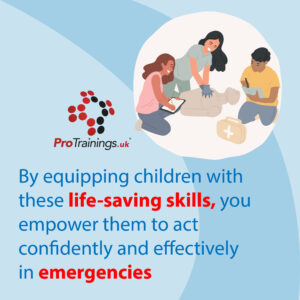
1. Calling for Help
- Teaching the Skill: Explain the importance of knowing when and how to call for help. Teach them to dial 999 in the UK and clearly communicate the situation to the operator.
- Practice: Role-play different scenarios where they might need to call for help, ensuring they understand what information to provide, such as their location and what happened.
2. Treating Minor Cuts and Scrapes
- Teaching the Skill: Show children how to clean a small wound with water and apply a plaster or bandage.
- Practice: Use a teddy bear or a doll to practice cleaning and bandaging pretend wounds.
3. The Recovery Position
- Teaching the Skill: Explain that the recovery position helps someone who is unconscious but breathing stay safe until help arrives. Demonstrate how to gently roll a person onto their side and tilt their head back to keep the airway open.
- Practice: Let children practice the recovery position with a classmate or family member under supervision.
4. Helping Someone Who Is Choking
- Teaching the Skill: Explain the signs of choking and how to help. For older children, demonstrate back blows and abdominal thrusts (Heimlich manoeuvre).
- Practice: Use a soft toy or a pillow to practice the motions of back blows and abdominal thrusts.
5. Basic CPR (for Older Children)
- Teaching the Skill: For older children, introduce the concept of CPR. Explain that CPR involves chest compressions to help someone whose heart has stopped beating.
- Practice: Use a CPR manikin to practice the correct hand placement and compression technique. Emphasise the importance of calling for help before starting CPR.
4. Reinforcing First Aid Knowledge
Repetition and reinforcement are key to helping children retain their first aid knowledge:
- Regular Practice: Set aside time for regular first aid practice sessions. This could be done monthly or as part of a safety day at school.
- Use Visual Aids: Posters, flashcards, and diagrams can help children remember the steps for different first aid procedures.
- Encourage Discussion: Create an open environment where children feel comfortable asking questions and discussing what they’ve learned.
5. Building Confidence in Kids
Building confidence is just as important as teaching the technical skills:
- Praise Efforts: Always praise children for their efforts in learning first aid, even if they don’t get it perfect right away.
- Provide Reassurance: Let them know that it’s okay to be scared in an emergency, but their knowledge can help make a difference.
- Encourage Responsibility: Encourage kids to take on roles in safety drills at school or home, reinforcing their sense of responsibility.
Conclusion
Teaching children basic first aid skills is an investment in their safety and the safety of others. By equipping them with these life-saving skills, you empower them to act confidently and effectively in emergencies. Start with simple concepts and build on their knowledge as they grow, fostering a lifelong awareness of health and safety.
The post First Aid for Children: Teaching Kids Basic Life-Saving Skills appeared first on Online Health & Safety Training Courses | ProTrainings Europe.
]]>