The post Mental Health First Aid: Spotting Early Warning Signs and Responding appeared first on Online Health & Safety Training Courses | ProTrainings Europe.
]]>When we think of first aid, most of us picture bandages, CPR, or dealing with physical injuries. But mental health first aid is just as important. Many people will experience anxiety, depression, or another mental health challenge at some point in their lives. Knowing how to recognise early signs and respond appropriately can make a huge difference, even if you’re not a healthcare professional.
Why Mental Health First Aid Matters
Mental health issues can affect anyone. In the workplace, schools, and our personal lives, these challenges are often hidden but can have a big impact on wellbeing, relationships, and safety. While only a trained professional can diagnose or treat a mental health condition, anyone can learn to notice the signs and offer initial support.
Common Early Warning Signs
Every individual is different, but there are some general signs that may indicate someone is struggling:
- Changes in mood or behaviour – noticeable sadness, irritability, withdrawal, or sudden mood swings.
- Loss of interest – giving up hobbies, social activities, or things they once enjoyed.
- Physical signs – tiredness, headaches, trouble sleeping, or changes in appetite.
- Difficulty concentrating – struggling with tasks, seeming distracted, or unable to make decisions.
- Visible anxiety – restlessness, rapid breathing, sweating, or being easily overwhelmed.
Recognising these signs early can allow for timely support before the situation worsens.
How to Respond as a Non-Healthcare Professional
You don’t need to have all the answers. Mental health first aid is about listening, reassuring, and guiding the person towards professional help if needed.
- Approach with care
Choose a quiet, private moment to check in. A simple, “I’ve noticed you don’t seem yourself lately – how are you doing?” can open the door. - Listen without judgement
Let them share what they feel comfortable with. Avoid offering quick solutions or minimising their feelings. - Reassure them
Remind them that it’s okay to struggle, and they are not alone. Small gestures of empathy go a long way. - Encourage professional help
Suggest speaking to a GP, a counsellor, or contacting support services. If they are in immediate danger of harming themselves, call 999. - Know your limits
You’re not expected to diagnose or treat, but you can be a bridge to further help and a source of comfort.
Supporting Someone in Crisis
If someone is experiencing a panic attack:
- Stay calm and reassuring.
- Encourage slow, steady breathing with them.
- Stay with them until the episode passes.
If you believe someone is at risk of suicide or self-harm, do not leave them alone. Call emergency services or a crisis helpline straight away.
ProTrainings’ Mental Health Awareness Course
If you’d like to build deeper knowledge and confidence in supporting mental health, ProTrainings offers the TQUK Level 1 Award in Mental Health Awareness (RQF). protrainings.uk
Here’s what you can expect from this course:
- Introductory yet meaningful: It gives you a clear understanding of what mental health and mental ill-health mean, the contributing factors, and the personal and social impact of common conditions. protrainings.uk
- 24 guided learning hours: Through classroom or blended formats, you’ll explore recognised disorders, stigma, cultural perspectives, and support resources. protrainings.uk
- Certification & CPD: The course is independently certified for CPD, and successful participants receive a ProTrainings certificate and CPD statement. protrainings.uk
- Regulated qualification: Because it’s a regulated qualification (RQF), it may be eligible for funding in some cases. protrainings.uk
- Practical outcomes: You’ll learn to identify symptoms, dispel myths, and know how to signpost someone to further support, aligning nicely with the mental health first aid guidance given above. protrainings.uk
By taking this course, you can go beyond just noticing and caring — you’ll develop the expertise to support others more confidently and responsibly.
Looking After Yourself Too
Supporting someone else can be emotionally draining. Make sure you also take care of your own wellbeing, and don’t be afraid to seek support if you need it.
Final Thoughts
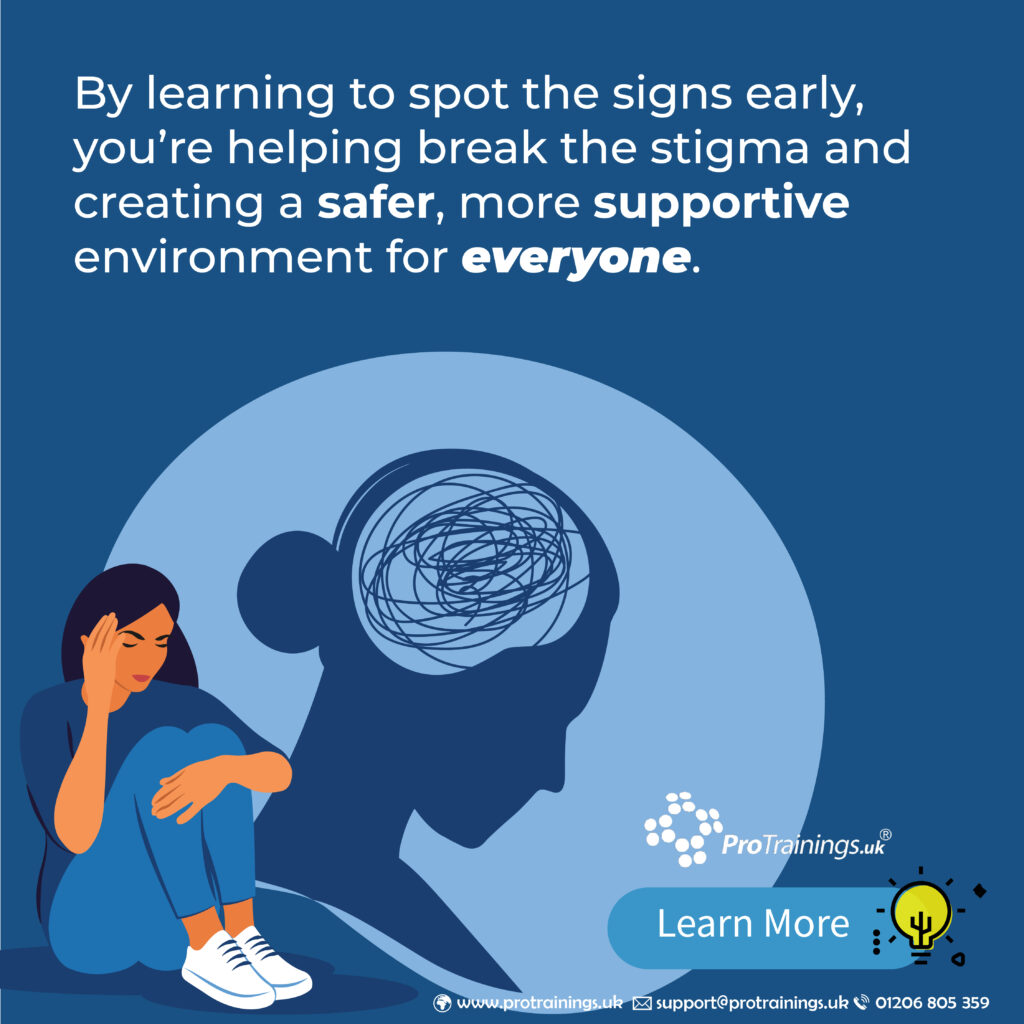
Mental health first aid is about compassion and awareness. You don’t need to be a professional to make a difference – listening, supporting, and encouraging the right help can change someone’s life. By learning to spot the signs early, you’re helping break the stigma and creating a safer, more supportive environment for everyone.
The post Mental Health First Aid: Spotting Early Warning Signs and Responding appeared first on Online Health & Safety Training Courses | ProTrainings Europe.
]]>The post Increase in absence due to mental health HSE Information appeared first on Online Health & Safety Training Courses | ProTrainings Europe.
]]> The rate of self-reported work-related stress, anxiety or depression show signs of increasing in recent years having previously remained broadly flat. Why is this?
We think it’s fair to say that with a recent focus on this topic in society and therefore, the workplace, it’s becoming less of a taboo subject to talk about mental health. It’s quite possible that simply more people are reporting this instead of suffering in silence or making up an excuse to cover the real issue of their absence. Similarly, more people may be able to recognise the symptoms of related mental health conditions now and are more aware of their mental state.
Lots of employers are beginning to provide training that helps managers spot mental health issues within their team, and making more support available for those suffering from conditions like stress and anxiety. How can we help?
Related ProTrainings course – Mental health awareness, available here: Mental Health Courses
The post Increase in absence due to mental health HSE Information appeared first on Online Health & Safety Training Courses | ProTrainings Europe.
]]>The post Understanding the Importance of Mental Health First Aid in the Workplace appeared first on Online Health & Safety Training Courses | ProTrainings Europe.
]]>1. What is Mental Health First Aid?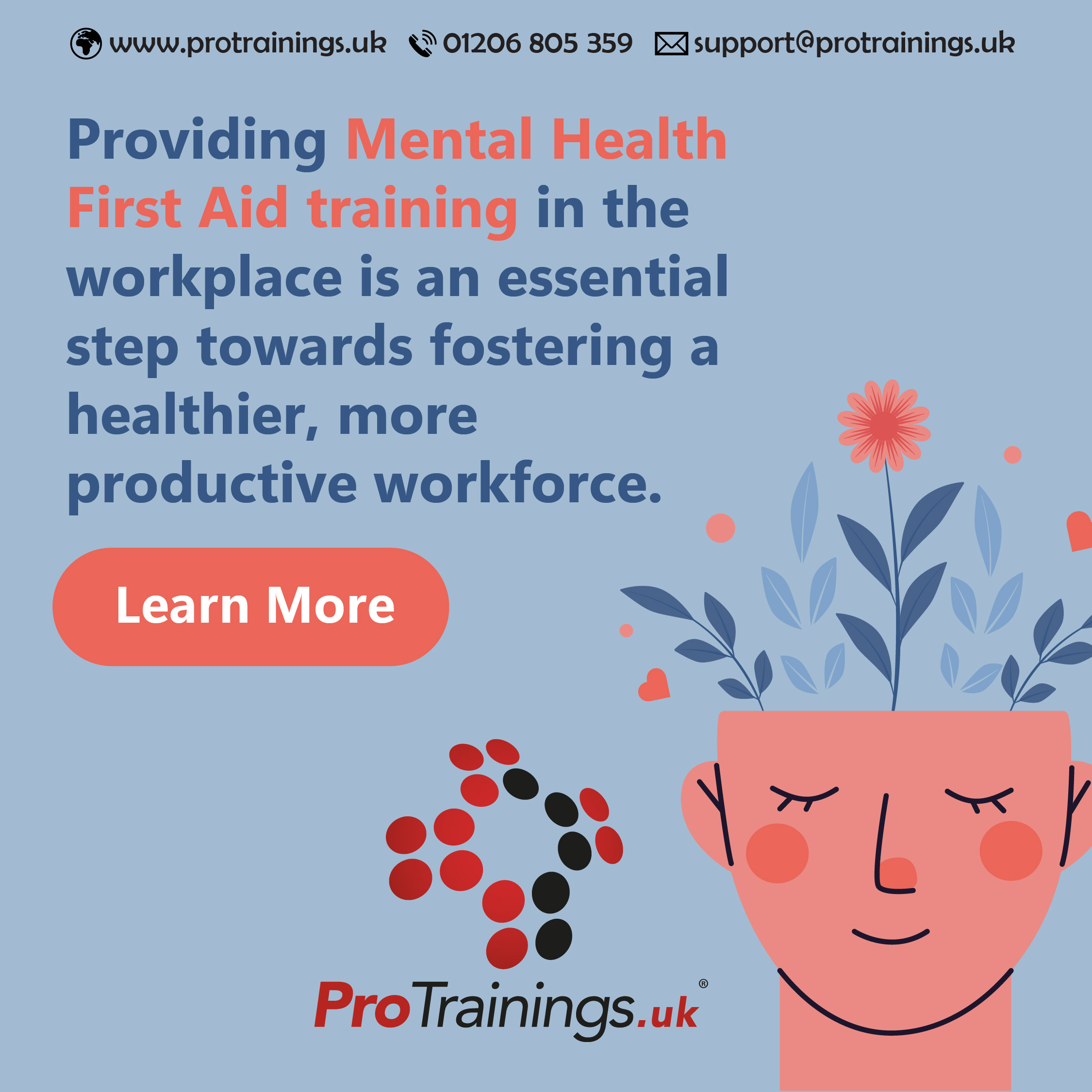
Mental Health First Aid is designed to help individuals recognise signs of mental health struggles and provide initial support before professional help is available. Similar to physical first aid, MHFA training teaches techniques to assist those experiencing anxiety, depression, stress, or crisis situations.
Check out our Mental Health First Aid course to learn more.
2. The Impact of Mental Health in the Workplace
According to HSE statistics, stress, depression, and anxiety are among the leading causes of work-related illnesses in the UK. Poor mental health affects productivity, employee morale, and overall workplace well-being.
Find out how our Risk Assessment Training can help identify and mitigate workplace stressors.
3. Benefits of Mental Health First Aid Training
MHFA training benefits businesses by improving employee well-being, reducing absenteeism, and fostering a supportive work environment. It also helps create a culture where mental health is openly discussed, reducing stigma.
Explore our full range of courses for workplace health and safety.
4. Legal and Ethical Responsibilities
Employers have a duty under the Health and Safety at Work Act 1974 to ensure the well-being of employees. Providing mental health support aligns with these obligations and contributes to a healthier workforce.
Learn more about our Health and Safety Awareness training.
5. How to Implement Mental Health First Aid in the Workplace
To implement MHFA successfully, businesses should provide formal training, appoint mental health first aiders, and integrate support systems within the workplace. Encouraging open discussions about mental health can break down barriers and promote inclusivity.
View our About Us page to learn how we support businesses in implementing workplace training.
6. Supporting a Positive Workplace Culture
Workplaces that prioritise mental health create a more engaged and resilient workforce. Encouraging peer support and regular check-ins can significantly improve employee satisfaction and retention rates.
7. Why Choose ProTrainings UK?
At ProTrainings UK, we provide accredited MHFA courses that help businesses support their employees’ mental health needs. Our expert-led training ensures that participants gain valuable skills in mental health support and workplace well-being.
Conclusion
Providing Mental Health First Aid training in the workplace is an essential step towards fostering a healthier, more productive workforce. By equipping employees with the right tools and knowledge, businesses can create a positive and supportive work environment that benefits everyone.
Discover how our Mental Health First Aid Course can benefit your organisation.
The post Understanding the Importance of Mental Health First Aid in the Workplace appeared first on Online Health & Safety Training Courses | ProTrainings Europe.
]]>The post Mental Health First Aid: Supporting Someone in Crisis appeared first on Online Health & Safety Training Courses | ProTrainings Europe.
]]>Mental health crises can be just as urgent and life-threatening as physical health emergencies. Knowing how to provide mental health first aid can help someone in crisis get the support they need when they need it most. This guide explains how to recognise the signs of a mental health crisis and how to offer effective support to someone who may be struggling.
1. Understanding Mental Health First Aid
Mental health first aid is the help offered to a person experiencing a mental health crisis until appropriate professional help is available or the crisis resolves. It’s similar to physical first aid but focuses on providing initial support for mental health conditions such as anxiety, depression, or substance use disorders.
- Goals of Mental Health First Aid:
- Preserve life where a person may be at risk of harm.
- Prevent the worsening of the person’s mental health condition.
- Promote recovery by encouraging appropriate professional help.
- Provide comfort to someone in distress.
2. Recognising the Signs of a Mental Health Crisis
Knowing the signs of a mental health crisis is crucial to providing timely support:
- Signs of Anxiety: Excessive worry, restlessness, physical symptoms like sweating or trembling, and difficulty concentrating.
- Signs of Depression: Persistent sadness, loss of interest in activities, changes in sleep and appetite, feelings of worthlessness, and thoughts of self-harm or suicide.
- Signs of Panic Attacks: Sudden overwhelming fear, heart palpitations, chest pain, shortness of breath, and feeling disconnected from reality.
- Signs of Psychosis: Hallucinations, delusions, confused thinking, and difficulty distinguishing reality from fantasy.
- Signs of Substance Use Crisis: Extreme intoxication, confusion, erratic behaviour, and potential overdose.
3. How to Approach and Support Someone in Crisis
When you notice someone in a mental health crisis, approaching them with care and empathy is essential:
- Stay Calm: Your calmness can help de-escalate the situation and provide reassurance.
- Approach Privately: Speak to the person in a private and safe environment to avoid adding to their distress.
- Use Open-Ended Questions: Encourage them to talk by asking open-ended questions like, “How are you feeling?” or “What’s on your mind?”
- Listen Without Judgment: Give them your full attention, listen actively, and avoid interrupting. Show empathy and avoid making assumptions or judgments.
- Validate Their Feelings: Acknowledge their emotions by saying things like, “It sounds like you’re going through a tough time” or “I’m sorry you’re feeling this way.”
4. Providing Immediate Support
Once you’ve established communication, the next step is to provide appropriate support:
- Encourage Professional Help: Gently suggest that they speak to a mental health professional, such as a GP, therapist, or counsellor. Offer to help them make an appointment if needed.
- Provide Information: If they’re open to it, provide information about mental health resources, such as helplines, support groups, or online services.
- Offer Practical Support: Sometimes, practical assistance—like helping with daily tasks or providing a listening ear—can make a big difference.
- Stay with Them: If the person is in immediate danger of harming themselves or others, do not leave them alone. Stay with them and seek urgent help.
5. Dealing with Suicidal Thoughts
If someone expresses suicidal thoughts, it’s crucial to take them seriously:
- Ask Directly: Don’t be afraid to ask directly if they are thinking about suicide. This can open the door for them to talk about their feelings.
- Remove Means: If possible, remove any means that could be used for self-harm, such as sharp objects or medications.
- Seek Immediate Help: Call 999 or take the person to the nearest A&E department if they are in immediate danger. You can also contact mental health crisis teams or helplines like Samaritans (116 123) for urgent advice.
6. Encouraging Self-Care and Recovery
After the immediate crisis has passed, encourage the person to engage in self-care and recovery practices:
- Promote Healthy Habits: Encourage them to eat well, exercise, and get enough sleep, as these can significantly impact mental health.
- Support Continued Care: Help them continue with any prescribed treatment or therapy. Encourage them to keep follow-up appointments and stay connected with support networks.
- Foster Social Connections: Social support is vital for recovery. Encourage them to reach out to friends, family, or support groups.
Conclusion
Mental health first aid is a vital skill that can help save lives and support individuals through their darkest moments. By understanding the signs of a mental health crisis and knowing how to offer support, you can make a significant difference in someone’s life. If you’re interested in learning more, consider taking a Mental Health First Aid course to further develop your skills and confidence in supporting those in need.
The post Mental Health First Aid: Supporting Someone in Crisis appeared first on Online Health & Safety Training Courses | ProTrainings Europe.
]]>