The post Legal Requirements and Safe Practices for Ladders and Step Ladders in UK Workplaces appeared first on Online Health & Safety Training Courses | ProTrainings Europe.
]]>
Legal requirements for ladders and step ladders in UK workplaces include:
- Suitability and maintenance: Employers must provide suitable ladders and step ladders that are properly maintained and fit for their intended purpose.
- Risk assessment: Employers must conduct regular risk assessments to identify potential hazards associated with ladder and step ladder use and implement appropriate control measures.
- Training and competence: Employers must ensure that all users of ladders and step ladders have received adequate training and are competent in their use.
- Safe use and inspection: Ladders and step ladders must be used and inspected according to the manufacturer’s instructions and safe working practices.
Examples of types of ladders include:
- Extension ladders: These include two or more sections that can be extended to reach greater heights.
- Step ladders: These self-supporting ladders have flat steps and are designed for use on level surfaces.
- Platform ladders: These ladders feature a platform at the top, providing a stable surface for the user to stand and work.
Dangers and potential accidents associated with ladder and step ladder use:
- Falls: Users can fall from ladders or step ladders due to overreaching, slipping, or losing balance.
- Ladder collapse: Ladders can collapse if they are not properly set up, maintained, or used according to the manufacturer’s instructions.
- Struck by falling objects: Workers or bystanders can be struck by falling objects when items are dropped or knocked off ladders.
Prevention methods to avoid accidents:
- Provide comprehensive training on the safe use, inspection, and maintenance of ladders and step ladders.
- Use the appropriate ladder or step ladder for the task, ensuring it is the correct height and type.
- Inspect ladders and step ladders before each use, checking for damage or defects.
- Set up ladders and step ladders on a level, stable surface, and ensure they are properly secured.
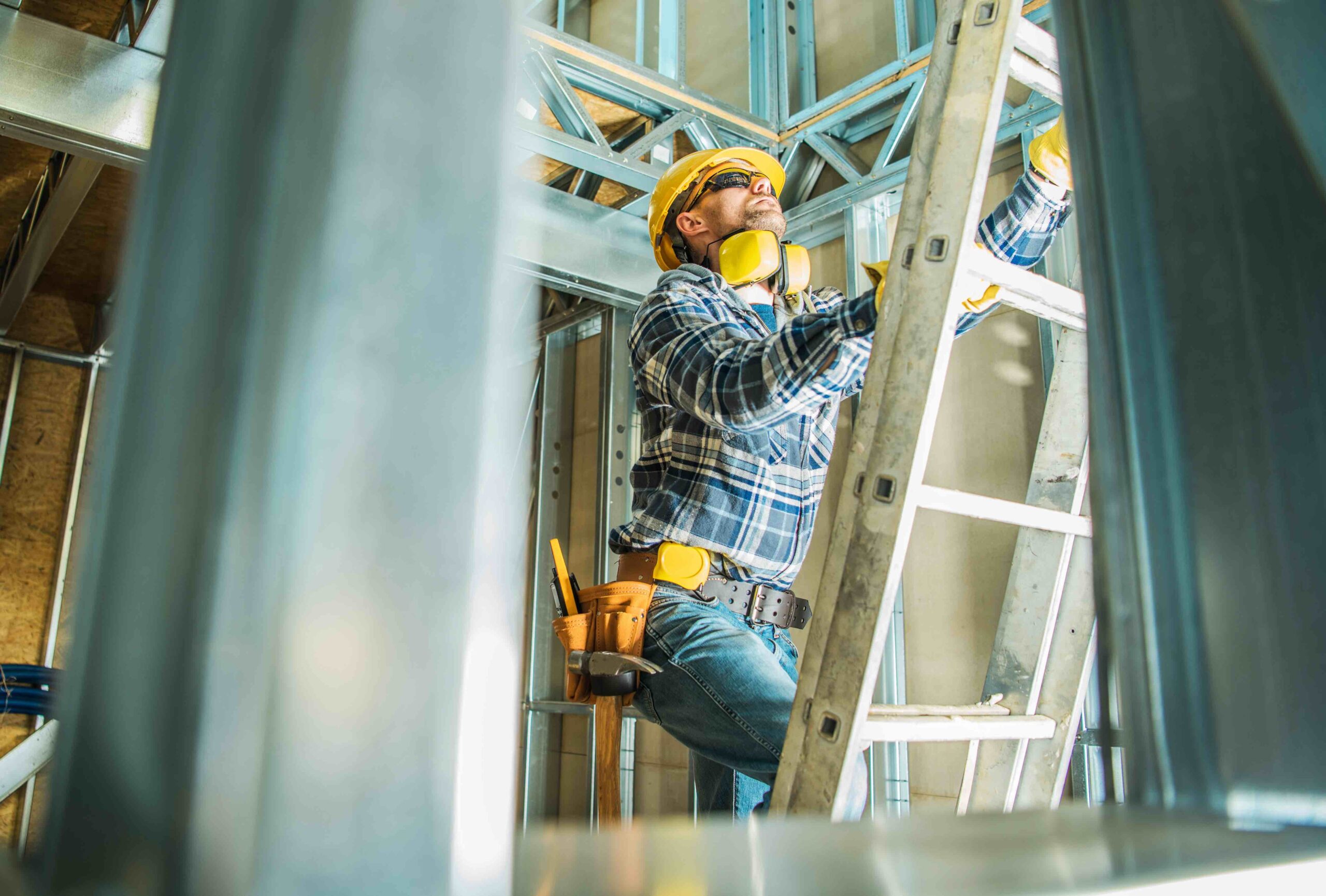
- Maintain three points of contact (two hands and one foot or two feet and one hand) when climbing and working on ladders.
- Avoid overreaching and ensure the ladder or step ladder is positioned close to the work area.
Implementing these prevention methods and complying with legal requirements can help employers maintain a safe work environment and minimize the risk of accidents and injuries associated with ladders and stepladders in UK workplaces.
The post Legal Requirements and Safe Practices for Ladders and Step Ladders in UK Workplaces appeared first on Online Health & Safety Training Courses | ProTrainings Europe.
]]>The post Working at Heights appeared first on Online Health & Safety Training Courses | ProTrainings Europe.
]]> Working at Heights pose risks no matter how high or low you are working. If your job requires working at heights you may need additional training as this is a high-risk area and you will need to meet the working at height regulations and have and practice using the correct equipment.
When working at heights were not just talking about working at the top of a ladder, this could be an instance where your using step ladders or need to climb up anything.
The Work at Height Regulations 2005 were introduced as falls from height are the most common cause of death in the workplace and a major cause of serious injury. These regulations apply in any situation where there is a risk of a fall from any height including falls below ground level. The regulations do not state a minimum or maximum height. The Health and Safety Executive has produced a guide to working at height, we have put a link to this in the student resources section of this course.
The regulations state that all work should:
- Be avoided where possible
- Be planned and organised to take into account all people that could be involved or affected
- Look at weather conditions
- Reduce the risk of anything falling from the works which could injure someone
- Make sure the whole site where the work is being carried out is suitable, safe and that all equipment is tested, checked and maintained correctly. This includes ensuring that there are no fragile surfaces like roofs that could give way, problems with roof lights or fixings, problems with corroded areas, sharp surfaces or slip hazards.
- Ensure that only trained and competent person are carrying out the work
- Working at height should only be done if it cannot be done from ground level. An example of this would be using poles to wash windows rather than ladders
- The employer should also plan for emergencies and take all risk assessments into account
- When working at height the correct personal protective equipment must be supplied and worn and the correct training given in its correct use.
It is the responsibly of employees to report and not use any equipment that is damaged or not fit for purpose.
Special equipment may be needed when working at heights including harnesses or safety lines. Serious medical conditions can result in being stuck in harnesses so you need to be specially trained in using this equipment. It is important that the person who will be carting out the work from a height is a competent person and free from medical problems that could cause problems. It may be oblivious to say this but the person must also have not a problem with heights.
In the average workplace working at a height just means using small platforms step ladders, anybody using them should be competent and medically fit, there is no point getting someone with a bad back to use a step ladder.
Anytime step ladders or movable platforms are used you need to make sure they adhere to the companies risk assessment, such as making sure they have non-slip rubber feet on them or having two people use the ladder, one person to go up the ladder and the other to make sure it doesn’t move. Appropriate warning signs should be used in the area where the work is being carried out.
The hierarchy of working at height is to first avoid the work where possible, then to use equipment or other measures to prevent falls while working at height like the use of cherry pickers and finally when the risk cannot be eliminated, to use work equipment to reduce the risk and consequences of a fall should one happen.
The post Working at Heights appeared first on Online Health & Safety Training Courses | ProTrainings Europe.
]]>