The post Fire Safety Act 2021 appeared first on Online Health & Safety Training Courses | ProTrainings Europe.
]]>One of the key requirements of the Act is the designation of a responsible person for each building. The responsible person is responsible for ensuring that fire safety measures are in place and regularly maintained. This includes carrying out a fire risk assessment to identify any potential fire hazards and assessing the level of risk.
The fire risk assessment is a crucial part of the Act’s requirements. It is a thorough examination of the building, its occupants, and the activities that take place within it. The aim of the assessment is to identify any potential fire hazards and assess the level of risk. This information is then used to develop a fire safety plan, which outlines the measures that will be put in place to prevent and manage fires.
Once the fire risk assessment has been carried out, the responsible person must implement the necessary fire safety measures. This may include installing fire alarms and emergency lighting, providing firefighting equipment, and ensuring that exit routes are clearly marked and unobstructed. The responsible person must also ensure that these measures are regularly tested and maintained to ensure they are working properly.
In addition to these requirements, the Act also introduces new penalties for breaches of fire safety regulations. This includes fines and imprisonment for those who fail to comply with the Act’s requirements. These penalties are intended to act as a deterrent and ensure that the Act’s requirements are taken seriously.
The Fire Safety Act 2021 also includes provisions for the enforcement of the Act’s requirements. Fire and rescue services are responsible for enforcing the Act in most cases, and they have the power to inspect buildings, issue notices, and take legal action against those who fail to comply with the Act’s requirements.
Overall, the Fire Safety Act 2021 is an important step towards improving fire safety in buildings and protecting people from the risk of fire. It is the responsibility of everyone to ensure that the requirements of the Act are met in order to keep people safe.
The Act applies to most buildings, including homes, schools, hospitals, and offices. This means that property owners, landlords, and responsible persons must ensure that their buildings comply with the Act’s requirements. This can be a complex and time-consuming process, but it is essential for ensuring the safety of occupants and protecting against the risk of fire.
One of the key challenges of implementing the Act’s requirements is the need to balance fire safety with other considerations, such as cost and practicality. For example, installing fire alarms and emergency lighting can be expensive, and some buildings may have unique features that make it difficult to implement certain fire safety measures. In these cases, it is important to work with fire safety experts to find solutions that meet the Act’s requirements while also considering other factors.
Another challenge of the Act is ensuring that the requirements are understood and followed by everyone who is affected. This includes property owners, landlords, responsible persons, and occupants of buildings. It is essential that everyone is aware of the Act’s requirements and their own responsibilities in relation to fire safety.
In conclusion, the Fire Safety Act 2021 is a significant step forward in fire safety. It replaces outdated legislation and introduces new requirements that are designed to protect people and buildings from the risk of fire. While implementing the Act’s requirements can be challenging, it is essential for ensuring the safety of occupants and protecting against the risk of fire.
The post Fire Safety Act 2021 appeared first on Online Health & Safety Training Courses | ProTrainings Europe.
]]>The post Fire statistics in UK workplaces appeared first on Online Health & Safety Training Courses | ProTrainings Europe.
]]>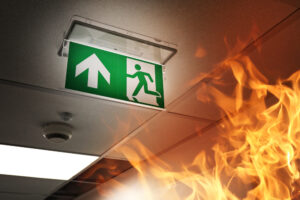 Fires in the workplace are a significant concern for employers in the United Kingdom. Not only do they pose a risk to the safety and health of employees, but they can also result in property damage and financial loss for businesses.
According to the latest statistics from the Home Office, there were 18,244 non-domestic building fires in the UK during the 2019/2020 period. Out of these fires, 4,495 occurred in industrial or commercial properties, which include factories, warehouses, and offices. These figures highlight the significant risk that fires pose to UK workplaces.
The Home Office also reports that during the same period, there were 15 fatalities resulting from non-domestic building fires in the UK. Although this figure represents a decrease from the previous year’s 23 fatalities, it is still a cause for concern. In addition, there were 1,119 non-fatal injuries resulting from non-domestic building fires during the 2019/2020 period.
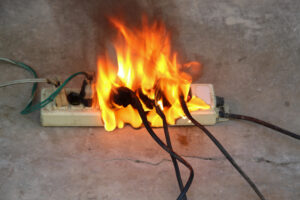 The most common causes of fires in the workplace in the UK are electrical faults and misuse of equipment. Electrical faults accounted for 24% of all non-domestic building fires in the UK during the 2019/2020 period. Misuse of equipment, including the incorrect use of flammable substances and smoking, accounted for 22% of all non-domestic building fires in the same period. Employers have a legal obligation to protect their employees from the risk of fire in the workplace.
The Regulatory Reform (Fire Safety) Order 2005 requires employers to conduct a fire risk assessment and implement measures to prevent fires from occurring. This includes providing adequate fire detection and warning systems, ensuring that escape routes are clear and accessible, and providing employees with fire safety training.
In addition to complying with fire safety regulations, employers can take several measures to prevent fires from occurring in the workplace. These measures include regular maintenance and testing of electrical equipment, prohibiting the use of flammable substances in the workplace, and ensuring that smoking is only permitted in designated areas.
The UK government also provides resources and guidance for employers to help them comply with fire safety regulations and prevent fires from occurring. This includes the Fire Safety Risk Assessment Guides, which provide detailed guidance on conducting a fire risk assessment and implementing measures to prevent fires from occurring.
In conclusion, fires in the workplace pose a significant risk to the safety and health of employees in the UK. Employers must take their responsibilities seriously and implement measures to prevent fires from occurring. By complying with fire safety regulations and taking proactive measures to prevent fires, employers can create a safer working environment for their employees and reduce the risk of property damage and financial loss.
The post Fire statistics in UK workplaces appeared first on Online Health & Safety Training Courses | ProTrainings Europe.
]]>The post Water fire extinguishers appeared first on Online Health & Safety Training Courses | ProTrainings Europe.
]]>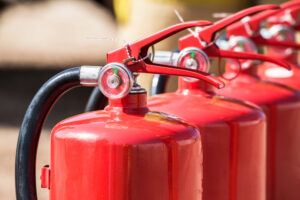 How to use a water extinguisher. First of all, you need to make sure it has still got its tag and pin in place. You need to check the gauge to make sure it is full. I also check the label, the back, it is in date. So once you know this extinguisher is fit for use and that should be part of the checks they are doing in your building anyway.
The first thing you need to do is pull the plastic tag. Once that’s pulled off, pull out the pin. It is now ready to go. Press on the handle, and stop and now, the fire is out. If you are not sure, you could take a few steps forward, do a few more sprays and stop. Spray a bit more to make sure the fire is totally out. Remember, keep your distance. Do not get too close to a fire, make it do the work. Do not compromise your safety. Now that we have used this extinguisher, we will need to get it serviced. Already, it has lost most of its pressure. So, we cannot just re-tag it back up again and put it on the wall. It has got to have a complete service, so it is now ready for the next time. It is important to learn fire safety training.
For more information on fire safety also visit our confined space course.
The post Water fire extinguishers appeared first on Online Health & Safety Training Courses | ProTrainings Europe.
]]>The post Fire statistics in UK workplaces appeared first on Online Health & Safety Training Courses | ProTrainings Europe.
]]> Fires in the workplace are a significant concern for employers in the United Kingdom. Not only do they pose a risk to the safety and health of employees, but they can also result in property damage and financial loss for businesses.
According to the latest statistics from the Home Office, there were 18,244 non-domestic building fires in the UK during the 2019/2020 period. Out of these fires, 4,495 occurred in industrial or commercial properties, which include factories, warehouses, and offices. These figures highlight the significant risk that fires pose to UK workplaces.
The Home Office also reports that during the same period, there were 15 fatalities resulting from non-domestic building fires in the UK. Although this figure represents a decrease from the previous year’s 23 fatalities, it is still a cause for concern. In addition, there were 1,119 non-fatal injuries resulting from non-domestic building fires during the 2019/2020 period.
 The most common causes of fires in the workplace in the UK are electrical faults and misuse of equipment. Electrical faults accounted for 24% of all non-domestic building fires in the UK during the 2019/2020 period. Misuse of equipment, including the incorrect use of flammable substances and smoking, accounted for 22% of all non-domestic building fires in the same period. Employers have a legal obligation to protect their employees from the risk of fire in the workplace.
The Regulatory Reform (Fire Safety) Order 2005 requires employers to conduct a fire risk assessment and implement measures to prevent fires from occurring. This includes providing adequate fire detection and warning systems, ensuring that escape routes are clear and accessible, and providing employees with fire safety training.
In addition to complying with fire safety regulations, employers can take several measures to prevent fires from occurring in the workplace. These measures include regular maintenance and testing of electrical equipment, prohibiting the use of flammable substances in the workplace, and ensuring that smoking is only permitted in designated areas.

The UK government also provides resources and guidance for employers to help them comply with fire safety regulations and prevent fires from occurring. This includes the Fire Safety Risk Assessment Guides, which provide detailed guidance on conducting a fire risk assessment and implementing measures to prevent fires from occurring.
In conclusion, fires in the workplace pose a significant risk to the safety and health of employees in the UK. Employers must take their responsibilities seriously and implement measures to prevent fires from occurring. By complying with fire safety regulations and taking proactive measures to prevent fires, employers can create a safer working environment for their employees and reduce the risk of property damage and financial loss.
The post Fire statistics in UK workplaces appeared first on Online Health & Safety Training Courses | ProTrainings Europe.
]]>The post Employee’s life is saved thanks to quick thinking team at Gressingham Foods appeared first on Online Health & Safety Training Courses | ProTrainings Europe.
]]>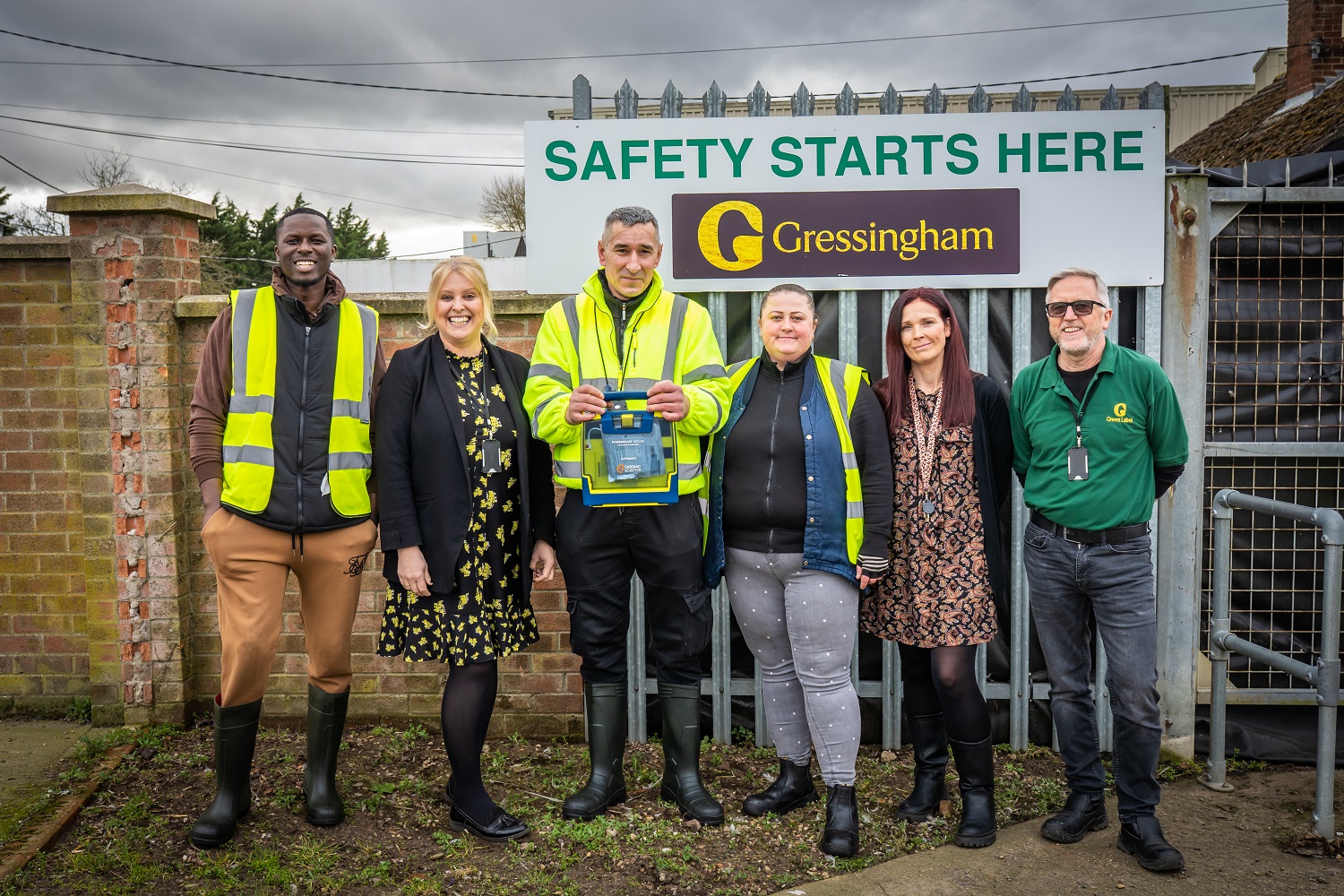 Employee’s life is saved thanks to quick thinking team at Gressingham Foods, with the administration of CPR and a defibrillator unit at hand, Gressingham Foods employee survives sudden cardiac arrest
A man’s life has been saved after he suffered a cardiac arrest at work thanks to the quick-thinking actions of his colleagues at Gressingham Foods.
Artur Klab, a 45-year-old factory worker at Gressingham Foods, was moving trollies at its facility in Redgrave when he collapsed of a sudden cardiac arrest last December. Thankfully, Artur’s colleagues noticed he had collapsed immediately and were able to deliver CPR and administer five shocks from the factory’s defibrillator – an action that saved Artur’s life.
Gressingham Foods manager Karoline Novak, who was one of the first on the scene when Artur collapsed, said:
“As soon as I saw Artur collapse, I knew that something was wrong. I rushed over to him and one of my colleagues, Shane Long, noticed that he had stopped breathing.
“Another of my colleagues, Grace Evans, contacted security immediately to call for an ambulance. Shane, along with the other co-workers at the scene Carrie Barrett, Marcelino Da Silva, James Pipe and Theo Kadova, all began taking it in turns to administer CPR.
“Thankfully, we had a defibrillator close by on-site and my colleague James was able use the unit to deliver a total of 5 shocks to Artur. Eventually, we were able to establish a heart rhythm and shortly after that, the paramedics arrived to take Artur to hospital in an air ambulance.
“It was a really scary situation but I’m just so glad that we were all so close by to help Artur.
Artur’s cardiac arrest was caused by an underlying heart condition he was unaware of – the dangers of which were highlighted by the collapse of footballer Christian Eriksen after he suffered a cardiac arrest on the pitch at the 2020 UEFA European Football Championships.
Following his transfer to the hospital, Artur made a remarkable recovery, returning to consciousness and being able to speak to family and friends within 48 hours of his collapse. He has since had an implantable cardioverter-defibrillator fitted to his heart, which will help restart his heart if needed, and was able to return to work in January.
The paramedics who attended the scene said the fact his colleagues were able to act quickly and use a defibrillator to restart Artur’s heart was the reason his life had been saved and that he had avoided catastrophic brain damage.
Speaking about the experience, Artur said: “I want to thank everyone who helped me as without their quick response I don’t think I would be here today.
“I am grateful to everyone that assisted me and all the aftercare and kind messages that the team at Gressingham Foods has given me.”
Gressingham first installed a defibrillator at its Redgrave facility 10 years ago and routinely provides medical training – including how to administer CPR – to its employees.
Following the incident, the business also brought in a life councillor to support those that had witnessed Artur’s collapse. The employees involved in saving Artur’s life also received a thank you letter and gift from the company’s managing director Chris Morley.
Carrie Barrett, a learning and development manager at Gressingham Foods who helped issue CPR said: “This incident highlights the importance of businesses investing medical in life-saving equipment such as defibrillators and in training for their staff.
“I’m really thankful that we were able to act quickly to save Artur’s life and am so pleased to see him back fit and well.”
All of us at ProTrianings congratulate the team at Gressingham Foods and we have awarded them the ProTrainings Good Samaritan Award for their good quick thinking and action.
The post Employee’s life is saved thanks to quick thinking team at Gressingham Foods appeared first on Online Health & Safety Training Courses | ProTrainings Europe.
]]>The post Keeping safe at a road traffic collision? appeared first on Online Health & Safety Training Courses | ProTrainings Europe.
]]>In this post, we asked our Paramedics, how can you keep safe when dealing with a road traffic collision?
A road traffic collision is potentially a very dangerous scene. We have moving traffic, chemicals, fuels, passive bystanders, patients who are injured, upset and angry. All these things can present a danger to us. My advice is before you even get out of your car or approach the scene just take a second to think, “Is it safe? Am I going to end up on the list of casualties here if I proceed towards this incident?” Sometimes the dangers are hidden, fumes we can’t see. There are explosion risks that we might not immediately anticipate. But if we just take that second to stop and think, “Is it safe?” We can be less of a danger to ourselves and the people around us.
When we have got people turning  up at RTCs, safety is the number one priority. Think about where you are going to park. Think about how we are going to get emergency services to that scene. If you pull up on a blind bend and another car comes around that corner, you have got no way of pre-warning them, so stop prior to the bend, or after the bend where there is plenty of space, where there is a clear view. Think about where you are going to stop. Think about if you are required. Make sure that emergency services are called to back up, because if you have not called them who has? We do not know. The emergency services would rather have two or three calls on an RTC than none at all. But just be careful. We are dealing with chemicals potentially. We are dealing with fire risk, we are dealing with oil, we are seeing slip, trip and fall, glass. There are many, many dangers on an RTC scene, and are you prepared and are you kitted to deal with that sort of situation? So, sometimes it is better to stay back and just make sure the emergency services are on route to you than it is to actually get involved. And when you look at things like motorways, you have got to think about high speed, you have got to think about vision from the drivers heading your direction. There is a lot of things to take into consideration, but we do not want any other casualties. We would rather have one than two or three, so think of safety first.
The post Keeping safe at a road traffic collision? appeared first on Online Health & Safety Training Courses | ProTrainings Europe.
]]>The post What should you do when you see blue flashing lights behind you? appeared first on Online Health & Safety Training Courses | ProTrainings Europe.
]]>In this post, we asked our Paramedics, what should you do when you see blue flashing lights behind you?
So my advice would be doing not speed up, keep going until you can find somewhere safe to indicate and pull over to the left. Preferably not parallel to some bollards or where the road narrows or where there is oncoming traffic.
Another very dangerous one and this has caused fatal accidents in the past, has been where not the car immediately in front of the ambulance, but the car in front of that, sees the ambulance, takes action to pull over, but the car behind that car, between the ambulance and the car, does not see us and just swerves to pull out. Now, we are kind of trained to anticipate that, but sometimes it can happen right at the last second as we have planned our overtake and we have to take evasive action to miss the car.
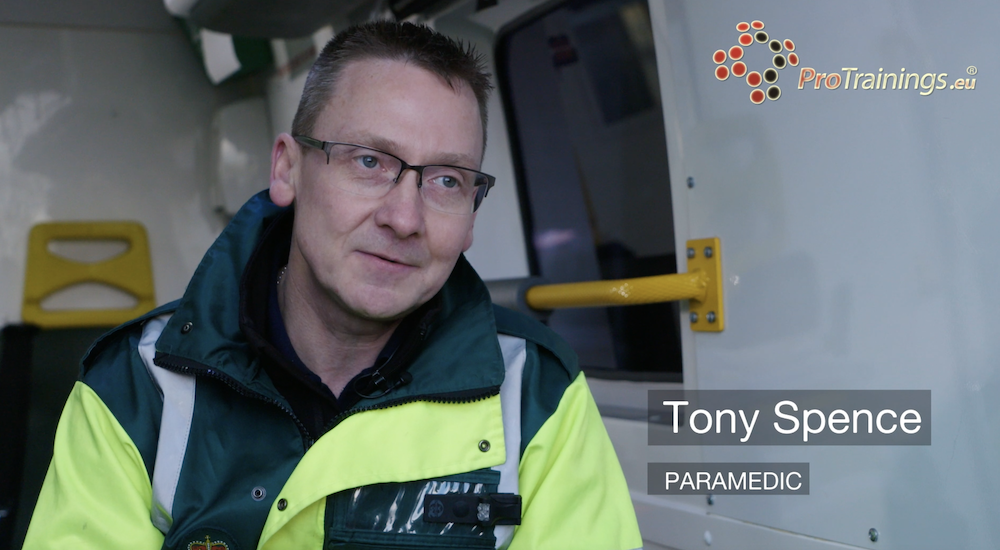 I think when you see a vehicle in the rear-view mirror there are a few things that we, as emergency drivers, would like to see. First, if you put your left-hand indicator on at least I know you have seen me. I have got to guess what you are going to do, and if you put your left-hand indicator on, I know just by that visual effect that you have seen me coming. The next thing is not to jam your breaks on, not to try and climb up into a ditch or make a really erratic action, but to pull to the left-hand side as close as you can. Keep going, do not accelerate, but do not slow down too much. We would far rather be travelling forward at 30 miles an hour than stuck behind a lamp post that we cannot get past.
So, the indicator on to the left, pull to the left-hand side, keep progressing forward until you can find a spot that is safe to pull over or to stop or to get off the road, preferably not opposite to central bollards and that sort of stuff because that is a really common occurrence and let us go past usually at normal speeds. These vehicles are very heavy, they are very difficult to control at speed, so we need to have a bit of pre-warning as to what is going on. So, yeah, just let us know that you know we are there. And also, when you are pulling over or if you are driving behind traffic, just keep an eye on your mirrors because cars behind you when you pull over quite often pull out to overtake you and that puts them directly in the line of us. So yeah, just be observant and let us know what you do.
The post What should you do when you see blue flashing lights behind you? appeared first on Online Health & Safety Training Courses | ProTrainings Europe.
]]>The post NEW Fire Extinguisher Training appeared first on Online Health & Safety Training Courses | ProTrainings Europe.
]]>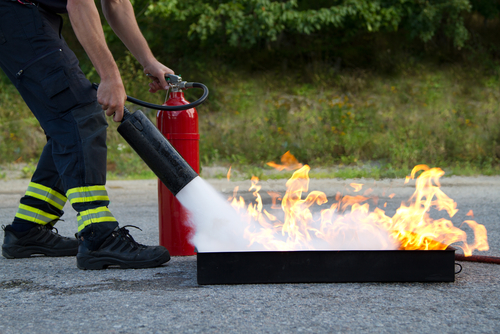 ProTrainings Europe has launched a new Fire Extinguisher Training course that learners can complete entirely online. A lack of confidence, knowledge and experience can lead to a fire extinguisher being used incorrectly, which can be dangerous. Ensure you are able to use an extinguisher safely and effectively in the event of a fire.
This course is suitable for Fire Marshals wishing to increase their knowledge or anyone who may find themselves in a situation where they may need to attempt to tackle a small fire. We also have a Fire Safety Awareness Level 1 course and a Fire Safety Principles Level 2 course, which are both ideal for in the workplace.
Course contents:
- Introduction
- Facts
- Using fire extinguishers
- Types of fire extinguishers
- Fire hoses
How the course works
Learners watch a series of informative videos, then complete a series of knowledge review questions. Once all of the modules have been completed, there is a final test. Thanks to the innovative ProTrainings learning platform, students can start and stop the course as often as required across any of their desktop or mobile devices.
Access the course here: www.profireextinguisher.co.uk
The cost is £14.95 + VAT after training per learner and this accounts for 2 hours of CPD: It comes with a ‘Certified CPD Statement’, a ProTrainings certificate and an ‘Evidence-Based Learning statement’. ProTrainings are a Skills for Care Centre of Excellence and qualifications endorsed by TQUK. Click for details of other training courses.
For more information on fire extinguisher training or any of our courses, call us on 01206 805359 or email support@protrainings.uk
The post NEW Fire Extinguisher Training appeared first on Online Health & Safety Training Courses | ProTrainings Europe.
]]>The post Fire Risk Assessments appeared first on Online Health & Safety Training Courses | ProTrainings Europe.
]]>
A business has a legal duty to ensure that any risk from fire or the effects of fire are kept by to an absolute minimum. In order to find out what risks there are, you would need to do a formal risk assessment.
This risk assessment is carried out by the person responsible within the business. They have to look at any of the possible risks and hazards, look at how they would deal with those hazards, what they would have to do in an emergency, how to evacuate the building, what sort of review plans they will need and finally what equipment they’ll need.
The first part of this risk assessment is to identify the hazards. Hazards will vary from one workplace to another. You will look at each individual hazard and see what you need to do about it. One hazard could be electrical fires, this could be dealt with by good housekeeping, having all appliances tested and to make sure they are functioning correctly.
You need to make sure that all electrical systems, like computer systems, heating systems, air conditioning or any factory type electrical equipment are well maintained and serviced.
Another potential hazard is smoking. For most of the places in the UK, it is not a problem as designated smoking areas are kept away from buildings and people are not permitted to smoke. This is a good example of how a potential problem fire from smoking can then be eliminated.
The risk of fire from flammable liquids or gases can be reduced by correct storage and also to make sure they are not near or associated with anything that could possibly cause a fire.
If there are possible vapours, you wouldn’t want to use anything that causes a spark which could ignite the vapours. Chemicals and fuels would need to be stored in an explosion-proof container.
Hazards can be reduced by good housekeeping. This means making sure bins are emptied and that they are sufficient in size. Also, make sure any equipment that is left on site or deliveries that have come into a building are kept away from fire exits or any possible flammable source.
Another hazard could be the building itself. Modern buildings have to follow very strict planning regulations. These are all designed to make sure that buildings are built in a safe manner, that fire can be contained if it did break out and evacuation routes are clear and easy to find.
Older buildings may be a problem. With an older building, you may need to make maintenance changes like installation of firewalls, different alarms systems, sprinkler systems and fire doors. All these things can help to reduce the risk in the event of a fire.
You need to assess the risk level as this will apply to the business itself or to the individuals that work there. Depending on what is happening in the workplace, the risk on the employees will vary. Not only do you need to look at the risks of the equipment but you need to look at the risks of the individuals who work there too.
Maybe someone who is working close to electrical equipment could be at a higher risk than someone working in an office. The other thing you need to look at is the people themselves. You need to look at their age, their ability to move and whether they are disabled.
If you’re working in a school or educational establishment, children may be less able to respond to an alarm.
You need to look at fire hazards and what could cause a fire. Things that can cause a spark are material that has been left around that can fuel a fire. Once you have identified all of these things you need to see how you can reduce this risk to avoid fire breaking out in the first place.
You also need to take action to protect your premises and people from fire. This can be fire alarms, fire extinguishers, evacuation and training. You also need to record, plan and train. Good records are very important so every time you are doing risk assessments, you’re analysing what has happened, or if there has been an emergency. You need to record exactly what has happened so you can analyse this and ensure that you can reduce risk in future.
You need to plan exactly what you need to do in the event in an emergency. Evacuation routes, how people activate the alarm system, who will phone the emergency services should something happen, what to do if the emergency exits are blocked due to a fire on one side of the building and how are you going to get out of the other side.
The final element here is to train. All this planning, risk assessing and equipment is no good unless all the staff and people who visit the building know exactly what to do. Regular training is vital and also you need to make sure anyone who visits the premises knows exactly what to do in the event of an emergency.
You also need to review. You need to look back on your risk assessments to make sure they are all up to date. Has anything changed since the last risk assessment – maybe another production line has been installed, changes to the way you work is carried out, changes to the access to the building or the layout of the building.
All these things will mean that you need to review risk assessments, to make sure that any changes that have happened within the workplace are recorded and also you have taken any necessary action to ensure that everybody can get out of the building in an emergency.
For more information on First Aid training courses visit ProTrainings website.
The post Fire Risk Assessments appeared first on Online Health & Safety Training Courses | ProTrainings Europe.
]]>The post Hepatitis C appeared first on Online Health & Safety Training Courses | ProTrainings Europe.
]]>
The hepatitis C virus or HCV reproduces in the liver causing inflammation and possibly cirrhosis or liver cancer. There are six main strains of the virus. In the UK, the most common strains are known as genotype 1 and genotype 3.
The disease can incubate for decades in the body and the exact number of people infected is not known. It is estimated that there are about 215,000 people with the infection in the UK. Most cases are in people who inject illegal drugs. It is estimated that up to half of injecting drug users become infected with hepatitis C.
About 80% of exposed people develop a chronic infection and 20% are able to clear the virus by naturally building immunity. Symptoms are not a reliable way to detect HCV. A blood test is needed to confirm that the virus is present. Symptoms may look the same as HBV and can include:flu-like symptoms such as muscle aches and a high temperature (fever); feeling tired all the time; loss of appetite; abdominal pain and feeling and being sick.
Unlike the HIV or the hepatitis B Virus, hepatitis C is spread primarily through contact such as illegal injection drug use; transfusion or transplant from an infected donor; during the tattoo process; occupational exposure to blood mostly needle sticks and it can also be spread through from an infected mother to her unborn baby.
The treatment for hepatitis C can be successful by taking medications for a number of weeks. The infection in the early stages is known as acute and if it continues for several months it is known as chronic. With acute infections, treatment does not always start straight away as it can be monitored by blood tests to see if your body fights the infection. With chronic infections, treatment usually is recommended.
Hepatitis C treatment usually involves making lifestyle changes to prevent further damage to the liver and to reduce the spread of the infection and the administration of one or more drugs.
Medications are often taken for 8 to 48 weeks and this time will vary depending on the strain of the virus. Regular blood tests are taken to check that the medications are working. There can be some side effects of treatment depending on the type of medication, the patient and what other medications they are taking. There are also concerns with giving hepatitis C medications during pregnancy as the drugs can be passed to the unborn baby. In pregnancy, treatment is often delayed until after the birth.
How effective the treatment is will depend on the strain the person has. Genotype 1 used to be hard to treat until quite recently but now the chances of cure are much better. Where treatment for hepatitis C is not successful, different medications are tried or combinations of medications are used to try and clear the infection.
It is important to note that where the virus is successfully cleared with treatment, the patient is not immune from contracting the virus again.
For more information on First Aid training courses visit ProTrainings website.
The post Hepatitis C appeared first on Online Health & Safety Training Courses | ProTrainings Europe.
]]>