The post Infection Control and Health and Safety appeared first on Online Health & Safety Training Courses | ProTrainings Europe.
]]> Infection Control n the workplace is a concern in many workplaces. You may be put at risk from infections, infection control is a course all on its own but the basics of infection control are to make sure that anybody fluid or blood doesn’t come into contact with you. In health and safety, we need to look at all hazards and depending on what area you work infection risks will vary. In the medical sector, this is a major concern as they are dealing with fluids or people on a daily basis. The average office will usually only have an issue with a first aid or illness situation and the risk assessments based on how the first aid at work regulations apply to the business will usually identify what first aid equipment is required and this will include items like gloves to protect against infections.
The sorts of infections we are looking at are Hepatitis, HIV and other blood-borne infection. Good infection control can also protect us from other more common and not as serious conditions like the common cold or flu. We need to treat anybody fluid as potentially hazardous and take extreme care and protect ourselves.
The way we protect ourselves is through Personal Protective Equipment (PPE). The most common of these are gloves, if you’re ever approaching somebody you need to make sure you’re wearing gloves, any blood or fluid from someone else could be a potential infection source.
Your skin is a natural barrier, however, if you have any cuts or breaks in the skin this could be an easy route for infection to enter the body. Infections can also enter your body via anybody opening including your eyes.
Good advice is to keep your hands clean, wash your hands regularly or use gels and wipes.
Make sure in any case where there’s a risk of infection you follow workplace protocols, you wear protective equipment and if you have any queries or doubts you ask your manager for more information.
The post Infection Control and Health and Safety appeared first on Online Health & Safety Training Courses | ProTrainings Europe.
]]>The post New Variant Coronavirus loss of taste and smell is “significantly less common” appeared first on Online Health & Safety Training Courses | ProTrainings Europe.
]]> One of the more common side effects of coronavirus is the loss of taste and smell, however, according to recent data, people infected with the UK variant are less likely to report this effect.
A study conducted by the Office for National Statistics (ONS) said the loss of taste and smell was “significantly less common” in patients who tested positive for the new variant compared to those with other variants of COVID-19. Find out more here: Visit the Sky News website
ProTrainings has two video online courses, Coronavirus COVID-19, and Coronavirus COVID-19 for Healthcare Workers. These courses are designed to give the general population life-saving advice about the virus, helping them to avoid catching it and how to safely help someone with it.
The series of video learning aids are available on both desktop and mobile devices and are followed by knowledge review questions and a final test to complete. Both these courses are completely free to take, however, should you require a certificate there is a charge of £10 +VAT.
If you require multiple courses or want to discuss your requirements for any of our 300 courses or nationwide face to face training, we can offer group rates and tailored solutions to serve your needs. You can contact us on 01206 805359 or email support@protrainings.uk.
The post New Variant Coronavirus loss of taste and smell is “significantly less common” appeared first on Online Health & Safety Training Courses | ProTrainings Europe.
]]>The post Using gloves to prevent Coronavirus appeared first on Online Health & Safety Training Courses | ProTrainings Europe.
]]>The post Using gloves to prevent Coronavirus appeared first on Online Health & Safety Training Courses | ProTrainings Europe.
]]>The post FFP face masks and COVID-19 Coronavirus appeared first on Online Health & Safety Training Courses | ProTrainings Europe.
]]>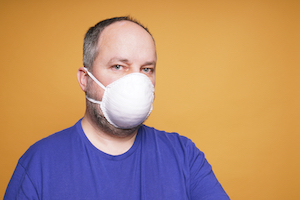 Before you panic-buy masks like there’s literally no tomorrow, you need to read this article. There are lots of myths about wearing of medical masks and FFP face masks and protecting yourself from COVID-19.
The post FFP face masks and COVID-19 Coronavirus appeared first on Online Health & Safety Training Courses | ProTrainings Europe.
]]>The post FREE Coronavirus awareness course aims to kick COVID-19 appeared first on Online Health & Safety Training Courses | ProTrainings Europe.
]]> Pioneering online first aid training company ProTrainings has launched a FREE Coronavirus COVID 19 awareness course, with the aim of saving lives by teaching the public how to take precautions against Coronavirus COVID 19.
- Introduction
- Signs and symptoms
- Preventing transmission
- Avoiding the virus
- Taking precautions
- Using PPE effectively
- Self-isolation
- Coping with stress
- Coronavirus with pets
The post FREE Coronavirus awareness course aims to kick COVID-19 appeared first on Online Health & Safety Training Courses | ProTrainings Europe.
]]>The post Coronavirus: Are your stress levels increasing due to COVID 19 outbreak? appeared first on Online Health & Safety Training Courses | ProTrainings Europe.
]]>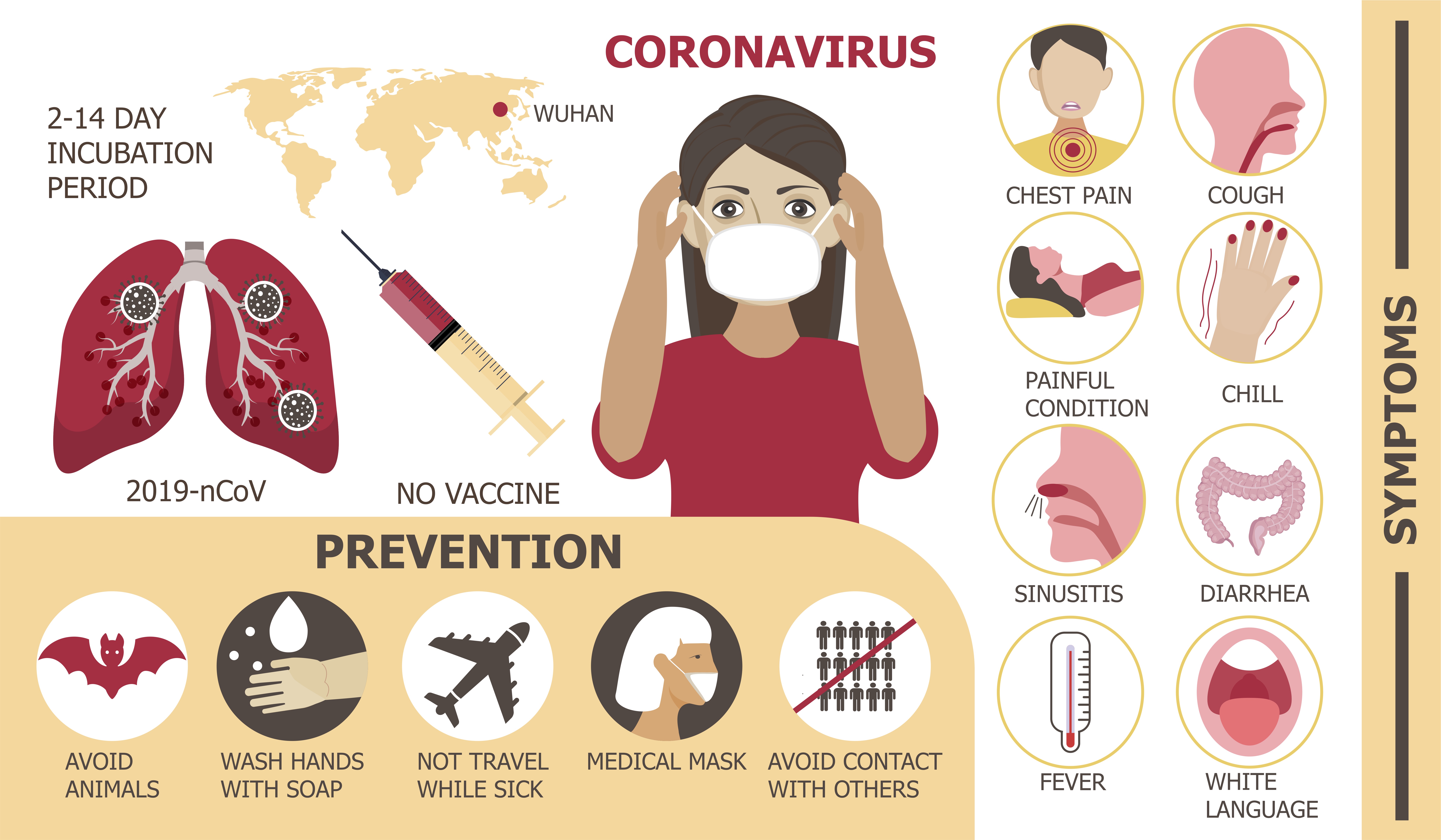 The prospects of a global COVID 19 epidemic can be pretty daunting. Worst-case scenarios splashed across news channels and papers. “Up to 600,000 UK citizens could die”. You’re not alone if you’re worrying.
The World Health Organisation has given some advice on coping with the possible stress caused by the Coronavirus COVID-19 outbreak. We have stated the exact advice below, which is correct at the time of the posting. More information can be found on its website here: www.WHO.INT
It is normal to feel sad, stressed, confused, scared or angry during a crisis. Talking to people you trust can help, so contact your friends and family if you feel this necessary.
What are the COVID 19 myths?
If you must stay at home, maintain a healthy lifestyle – including proper diet, sleep, exercise and social contacts with loved ones by email and phone with other family and friends.
Don’t use smoking, alcohol or other drugs to deal with your emotions. If you feel overwhelmed, talk to a health worker or counsellor. Have a plan, where to go to and how to seek help for physical and mental health needs if required.
Get the facts. Gather information that will help you accurately determine your risk so that you can take reasonable precautions. Find a credible source you can trust such as the WHO website or, a local public health agency.
Limit worry and agitation by lessening the time you and your family spend watching or listening to media coverage that you may perceive as upsetting.
And finally, draw on skills you have used in the past that have helped you to manage previous life adversities and use those skills to help you manage your emotions during the challenging time of this outbreak.”
Helping children to cope with COVID 19
Children may respond to stress in different ways such as being more clingy, anxious, by withdrawing, by being angry or agitated, or by bedwetting. You should respond to your child’s reactions in a supportive way, listen to their concerns and give them extra reassurance, love and attention.
Children need adults’ love and attention during difficult times. Remember to listen to your children, speak kindly and if possible, make opportunities for the child to play and relax.
Try and keep children close to their parents and family and avoid separating them and their caregivers wherever possible. If separation does occur, for example, if someone goes into hospital, ensure regular contact via phone or by messages and give them reassurance.
Keep to regular routines and schedules as much as possible, or help create new ones in a new environment, including school or learning as well as making time for safely playing and relaxing.
Provide facts about what has happened, explain what is going on now and give them clear information about how to reduce their risk of being infected by the disease in words that they can understand, according to their age. This also includes providing information about what could happen in a re-assuring way, for example, if. a family member or the child may start feeling unwell and may have to go to the hospital for some time so doctors can help them feel better.”
How do I learn more about COVID 19?
For more details on our new free Coronavirus COVID 19 online course contact us support@protrainings.uk
The post Coronavirus: Are your stress levels increasing due to COVID 19 outbreak? appeared first on Online Health & Safety Training Courses | ProTrainings Europe.
]]>The post Coronavirus: The facts on COVID-19 appeared first on Online Health & Safety Training Courses | ProTrainings Europe.
]]>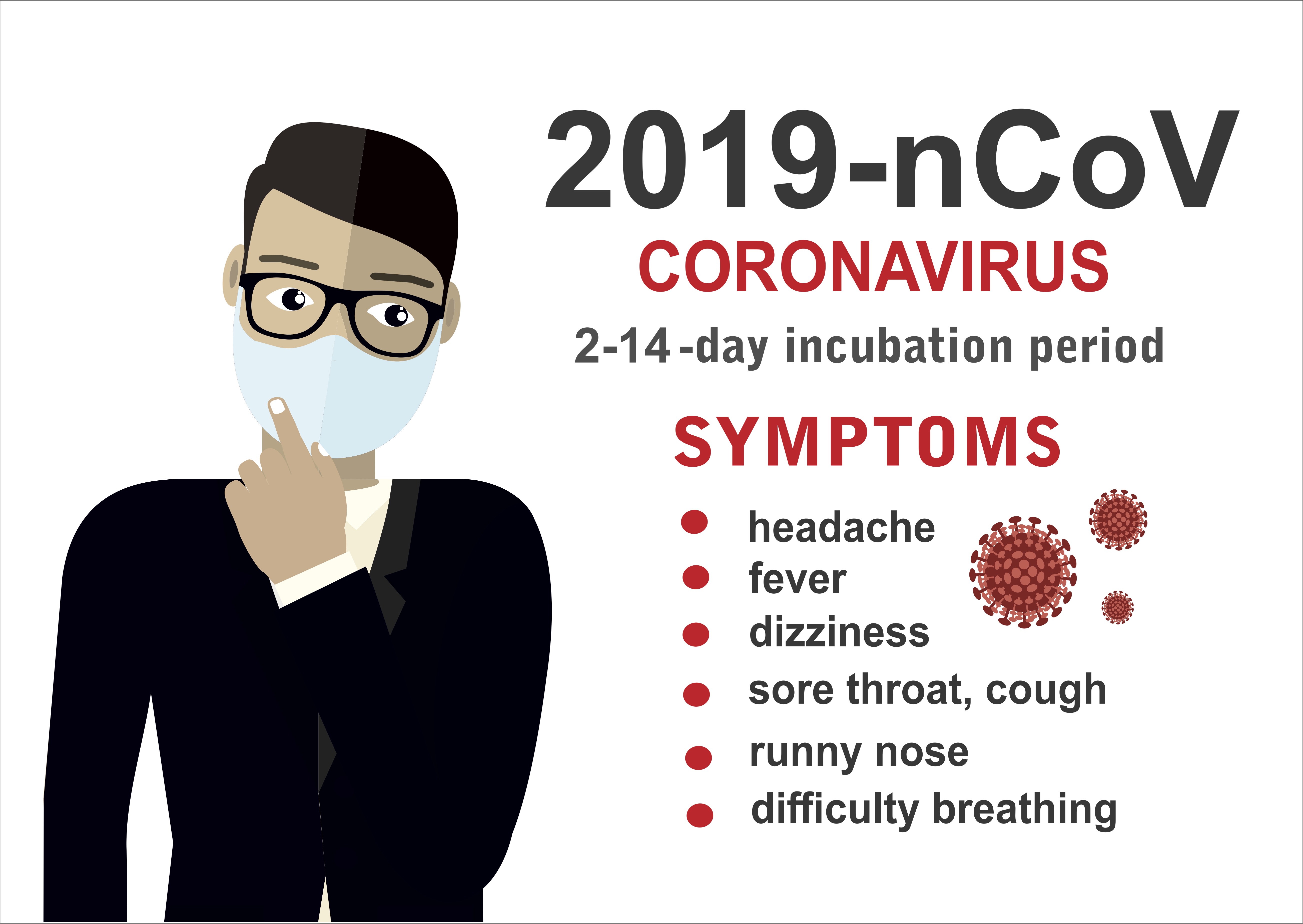 A lot is still to be learned about the coronavirus at the centre of the current global outbreak named COVID-19, but the basic symptoms are known. The World Health Organisation currently states that the incubation period is up to 14 days. In current cases, however, typically symptoms show in about 5 days.
The current World Health Organisation figures say that based on 44,000 patients with the virus, 81% developed mild symptoms, 14% developed severe symptoms and 5% became critically ill. The death rate appears to be between 1 and 2% but the current initial figures are obviously unreliable, given that it is a changing situation. That said, the WHO state that about 80% of infected people recover without medical treatment and some people that become infected do not develop any symptoms or feel unwell whatsoever.
Usually, first symptoms are a fever followed by a dry cough. This can escalate to shortness of breath and some patients require hospital treatment. Other symptoms are a headache, tiredness, nasal congestion, sore throat, diarrhoea and muscle aches. Symptoms often start out as mild and gradually worsen.
If you are in a high-risk group – have existing medical conditions or are elderly – or if you develop a fever, cough and breathing difficulties, you should seek medical attention by phoning the medical services rather than going to hospitals or medical centres, as there’s is a risk that you could spread the virus to others.
Transmission of Coronavirus
COVID-19 is spread via human-to-human contact and indirectly from infected surfaces. The novel coronavirus can be easily transmitted through respiratory droplets. These droplets are liquids that can be emitted when we cough or sneeze. They harbour infection and act as a vector for the virus. The droplets are heavier than air and travel about one metre, before resting on whatever surface they land on. These can infect another person when they enter the body through the mouth, nose or eyes; this is why it is very important to avoid close contact with anyone who has fever, cough or any other respiratory symptoms that you suspect may be COVID-19.
Being within 2 metres of an infected person puts you at a high risk of contracting the infection. Skin contact includes hugging, kissing, or shaking hands. Always avoid touching your face, even when you are using masks.
If you are caring for someone suspected of having COVID-19, encourage them to use tissues and dispose of these correctly to avoid indirect contamination. You should use the correct protection such as a mask and gloves, but ensure you’re cleaning your hands correctly and often too! Protective equipment should be used and disposed of correctly, and surfaces cleaned using suitable wipes or chemicals which kill the virus.
Handwashing
You can do your part in stopping the transmission of COVID-19 through proper handwashing techniques. There are some cases where handwashing is a must, such as after using a toilet, coming into contact with any infectious material or when they are visibly dirty. In cases where you have come into contact with someone who is symptomatic, wash your hands immediately and frequently from then. Avoid touching your face and make sure you are wearing the appropriate PPE.
Some people just wet their hands when they wash them, then call that effective handwashing! However, proper handwashing includes using anti-bacterial soap. Alcoholic hand-gels are also effective but you should try and use anti-bacterial soap where possible. There are many areas of the hands which people miss including the backs of the thumbs, tips of the fingers and in between each finger. When not washed, the virus can survive for days and you will likely spread it to many people.
Learn more about infection control.
The post Coronavirus: The facts on COVID-19 appeared first on Online Health & Safety Training Courses | ProTrainings Europe.
]]>The post Disability Awareness Video Online Course Now Live – Supporting Enhance the UK appeared first on Online Health & Safety Training Courses | ProTrainings Europe.
]]>Disability Awareness is a very important subject but until now understanding it has not been easy to learn. We have teamed up with Enhance the UK, a disability charity to develop this educational course to improve disability awareness. Fifty percent of all proceeds from course sales go direct to Enhance the UK to further support their excellent work in promoting and training disability awareness.
The course challenges the attitudes, perceptions and expectations of both disabled people and society as a whole in relation to disability. The course is user led, being presented by people with disabilities.
With this training, we aim to remove the embarrassment of social interaction when working with disabled people by teaching you simple hints and tips in a fun interactive online training.
The training covers all areas of disability:
- Deaf awareness
- Visual impairments
- Physical impairments
- British Sign Language – BSL
- All round disability awareness
- Disability and Communication training
- The equality act
The course is a series of short videos followed by knowledge review questions between the videos and a short multiple choice test at the end. When you complete the course you can download and print your completion certificate, evidenced based learning statement and Certified CPD certificate. There is also a download area and you can have access to the course for 8 months even after you have passed the course making it a useful resource of information.
As the course is taught by people with disabilities, the information given is accurate and you will learn about the problems and solutions of the disabled. You will also lean about communicating with the disabled and how you can help them in the workplace and community. If you would like a face to face lesson at your workplace, contact us and Enhance the UK can provide this for you.
For more information and to buy the course visit www.prodisabilityawareness.co.uk or call ProTrainings on 01206 805359.
The post Disability Awareness Video Online Course Now Live – Supporting Enhance the UK appeared first on Online Health & Safety Training Courses | ProTrainings Europe.
]]>The post NatraSan, a new natural first aid spray – a must for every home? appeared first on Online Health & Safety Training Courses | ProTrainings Europe.
]]>
NatraSan is a new first aid spray that is a good addition to any first aid kit. There are lots of different first aid sprays on the market but this one is a bit different as is a first aid spray containing pure Hypochlorous Acid which is a mild but incredibly effective acidic substance released by our white blood cells to kill invading pathogens, such as bacteria and viruses.
NatraSan effectively kills 99.9999% of harmful germs, including bacteria, viruses, fungi, yeasts and moulds. It is completely safe to humans, animals and the environment and as a result can be used to treat insect stings, cuts and wounds, athlete’s foot and as a disinfectant around the house – you can even use it to neutralise bad odours, such as foot and shoe odours.
We all see so many products advertised which claim they kill 99.9% of bacteria. This sounds good, but actually this is not enough to get close to passing the very strict European Standards EN Test. It also means that in suitable conditions of warmth the remaining bacteria can grow back to the original burden in as little as two hours.
So, for example, if you have one million bacteria you’re left with 1000 bacteria alive after using a 99.9% treatment. But if you were to use NatraSan on the same amount of bacteria you’d be left with just 0-1 still alive.
This spray is ideal for humans and animals and can be used on:
- Cuts and wounds to prevent infection
- Acne and Spots
- Athlete’s Foot
- Mouthwash
- Mosquito and Insect bites
- Destroying odours including foot and shoe odours
- Use as a general sanitiser
NatraSan is safe to use around the eyes and mouth, pH Neutral, so will not sting and kind on your skin.
NatraSan First Aid Spray is compliant with European Biocidal Regulations (EU528/2012). NatraSan has been independently laboratory tested to rigorous International standards and complies with BSEN 1276 (Bacterial) BSEN 13704 (Sporicidal) BSEN1656 (Bacterial) BSEN 13697 (Fungicidal).
NatraSan is available in two sizes, a handy 100ml spray bottle and a larger 250ml trigger spray pack and you can buy it from ITG Supplies or ProTrainings or direct by clicking here.
The post NatraSan, a new natural first aid spray – a must for every home? appeared first on Online Health & Safety Training Courses | ProTrainings Europe.
]]>The post New Updated 2015 Student Manuals appeared first on Online Health & Safety Training Courses | ProTrainings Europe.
]]> We have updated all first aid manuals to the latest 2015 guidelines and added more content to cover more subjects to support the courses. The non first aid manuals are also being updated and over half are now redesigned and updated. To download the manuals, for online, blended and classroom courses, login to your ProTrainings dashboard and you can download from there.
The post New Updated 2015 Student Manuals appeared first on Online Health & Safety Training Courses | ProTrainings Europe.
]]>