The post Online vs Classroom First Aid Training: Which to Choose appeared first on Online Health & Safety Training Courses | ProTrainings Europe.
]]>- Online Training: Flexible, self-paced, budget-friendly, and accessible 24/7. Ideal for theoretical learning with digital resources and quizzes. Costs start at around $19.95.
- Classroom Training: Hands-on practice with real equipment, face-to-face instructor feedback, and group collaboration. Best for building practical skills and confidence. Costs range from $40–$60.
Quick Comparison
| Aspect | Online Training | Classroom Training |
|---|---|---|
| Learning Style | Self-paced, virtual simulations | Hands-on, instructor-led |
| Schedule | Flexible, anytime access | Fixed dates and times |
| Cost | Starts at $19.95 | $40–$60 |
| Practice | Virtual simulations | Real equipment and teamwork |
| Certification | Check employer acceptance | Widely recognized |
Key Tip: Choose online if you need flexibility and lower costs. Opt for classroom if hands-on experience is crucial.

Online vs Classroom Training: Main Differences
Training Setup and Delivery
Online training takes place virtually, allowing students to progress at their own pace through digital modules. This format is particularly helpful for revisiting difficult topics.
Classroom training happens in a physical space with an instructor present. Instructors can demonstrate techniques in real-time and adjust their teaching based on how students respond.
| Aspect | Online Training | Classroom Training |
|---|---|---|
| Environment | Virtual, self-paced | Physical, instructor-led |
| Materials | Digital resources, videos | Physical equipment, mannequins |
| Interaction | Digital simulations | Face-to-face instruction |
| Assessment | Online quizzes | In-person skill evaluation |
Schedule Options
Online first aid training offers flexibility, letting students access materials any time, day or night. This is ideal for people with unpredictable schedules or those juggling multiple commitments. You can spread the training over a few days or complete it in one intensive session.
Classroom training operates on a fixed schedule with specific meeting times. While this structure ensures steady progress, it requires committing to set time slots and may span a full day or multiple sessions.
Practice and Feedback Methods
The way skills are taught and assessed differs significantly between the two formats. Classroom training provides hands-on practice, with students receiving direct feedback while practicing techniques on mannequins.
Classroom CPR training includes in-person assessments and immediate feedback using mannequins [1].
Online training, on the other hand, uses digital simulations and video demonstrations to explain concepts. Assessments are typically done through online quizzes, which focus more on theoretical understanding rather than hands-on skills.
Price Comparison
Online courses tend to be more budget-friendly due to lower overhead costs.
Classroom training, however, comes with added expenses for facilities, equipment, and instructor time. While this often results in higher fees, it also includes hands-on practice with professional tools and direct guidance from certified instructors, ensuring proper technique development. These cost differences highlight the unique advantages of each format, helping you decide which suits your learning needs and goals best.
How to do Compression-Only CPR
Why Choose Online First Aid Training
Online first aid training has become a go-to option for many, offering convenience and affordability. With a variety of courses available, it provides a flexible way to gain essential skills. Here’s why it stands out:
24/7 Access
One of the biggest perks of online training is that you can complete it whenever it suits you. For example, CPR Select’s certification programs can be wrapped up in about an hour [4]. No need to worry about class schedules or locations – just log in with an internet connection.
Learn at Your Own Speed
Online platforms let you control the pace of your learning. Need to revisit a topic? Pause, rewind, and review as much as you want. This approach is especially helpful for tackling tougher concepts and ensures you fully understand the material.
Lower Costs
Online first aid courses are a budget-friendly alternative to traditional classroom settings. For instance, basic CPR certification starts at just $19.95 [1]. Plus, you save on other expenses like:
| Cost Category | Savings with Online Training |
|---|---|
| Travel Expenses | No need to commute |
| Materials | Digital resources included |
| Time Off Work | Train during your free time |
| Recertification | Lower renewal fees |
Up-to-Date Course Content
Online platforms are frequently updated to reflect the latest guidelines and practices [3]. They often include videos, interactive tools, and instant assessments to help you track your progress. Research even shows that online learning can be as effective as traditional classroom methods [2].
For workplace certifications, many employers now accept online credentials. However, it’s a good idea to confirm this beforehand, especially if local regulations require additional in-person assessments.
sbb-itb-5e7756f
Why Choose Classroom First Aid Training
If you’re looking to gain practical skills and engage in interactive learning, classroom first aid training has a lot to offer. While online courses are convenient and budget-friendly, classroom training emphasizes hands-on experience and teamwork.
Practice Makes Perfect
In a classroom setting, you get to practice with real first aid equipment. This hands-on approach helps build muscle memory and boosts your confidence in handling emergencies. For example, one student successfully used the Heimlich maneuver they learned in class to save a choking peer, earning local recognition [5].
“It’s the first time I heard one of our students react to a situation and use what we’ve taught them in a real-life situation, which is remarkable.”
- Anthony Fallon, Millis High School physical education teacher [5]
Learn Directly from Experts
After practicing, you’ll receive direct feedback from instructors who refine your technique as you go. These experienced professionals tailor their teaching to meet your needs and provide immediate support:
| Benefit | What It Means |
|---|---|
| Real-time Correction | Fixes mistakes on the spot |
| Personalized Guidance | Adjusts to how you learn best |
| Scenario Adaptation | Shares relevant, real-world examples |
| Interactive Q&A | Answers your questions instantly |
Teamwork and Collaboration
Classroom training also fosters group learning. Working alongside others allows you to share experiences, develop communication skills, and practice coordinated responses. This teamwork is crucial since effective first aid often relies on collaboration [7].
“In a group setting, your team can learn collaborative techniques, emphasizing the importance of effective communication in emergencies” [6]
These cooperative exercises add an extra layer of preparedness to your first aid skills.
How to Pick the Right Training Format
Selecting the right training format depends on several factors: your learning style, schedule, budget, and certification requirements. These elements directly influence how well-prepared you’ll be for first aid situations.
Personal Learning Style
Your preferred way of learning plays a big role in how effective the training will be. For example, if you’re a visual learner, you might do better with online courses that include videos and interactive elements. On the other hand, if you learn best by doing, classroom training with hands-on practice might be a better fit.
| Learning Style | Best Format | Why It Works |
|---|---|---|
| Visual | Online | Includes videos and animations |
| Hands-on | Classroom | Allows practice with real equipment |
| Group-oriented | Classroom | Encourages team exercises |
| Self-paced | Online | Offers flexibility to review at your own pace |
Once you’ve identified your learning style, think about how much time you can dedicate to training.
Schedule Requirements
Your availability is another key factor. Some formats are more flexible than others, so it’s important to choose one that fits your lifestyle.
| Format | Schedule Type | Time Investment |
|---|---|---|
| Online | Self-paced | Accessible anytime, 24/7 |
| Classroom | Fixed dates | Requires specific days/times |
| Blended | Hybrid | Mix of flexibility and structure |
After considering your schedule, take a look at your budget to see what works best financially.
Cost Analysis
Training costs can vary widely depending on the format. Online courses are often more affordable, while classroom training may include additional expenses like travel or physical materials.
| Expense Type | Online | Classroom |
|---|---|---|
| Base Fee | Lower | Higher |
| Travel Costs | None | Varies |
| Materials | Digital | Physical |
| Time Off Work | Minimal | May be required |
Finally, make sure the training format aligns with any certification requirements you might need.
Required Certifications
Certifications are often a must, especially if the training is for work. It’s essential to confirm that the course you choose meets your workplace or industry standards. The Red Cross, for example, offers a range of accredited options that comply with current emergency science guidelines [8].
- Confirm which certifications your employer accepts.
- Check that the training provider is accredited.
- Look into renewal requirements for certifications.
- Consider how the certification could impact your long-term goals.
Summary and Next Steps
Now that you know the options, here’s how to get started on your certification:
For Online Training
- Pick an accredited provider like CPR Select, which offers certification for $19.95 [10].
- Set aside 1–2 hours to complete the course.
- Ensure the certification meets your workplace requirements before enrolling.
- Plan your study schedule to fit your daily routine.
For Classroom Training
- Budget for $40–$60 for a combined CPR and First Aid course [9].
- Consider group training if certifying a team; costs range from $35–$45 per person [9].
- Schedule time off work to attend the classes.
- Prepare for hands-on assessments by familiarizing yourself with the equipment.
Quick Decision Guide
| Factor | Online Training Is Best If You… | Classroom Training Is Best If You… |
|---|---|---|
| Budget | Need to keep costs under $25 | Can spend $40–$60 |
| Time | Want 24/7 flexible access | Can commit to scheduled sessions |
| Learning Style | Prefer self-paced study | Learn better with hands-on practice |
| Location | Want to avoid traveling | Have a nearby training center |
Choose the option that fits your budget, schedule, and learning preferences. Once you’ve decided, reach out to the provider and take the first step toward earning your certification.
The post Online vs Classroom First Aid Training: Which to Choose appeared first on Online Health & Safety Training Courses | ProTrainings Europe.
]]>The post Emergency Transport for Spinal Injuries: Key Steps appeared first on Online Health & Safety Training Courses | ProTrainings Europe.
]]>- Stabilize the spine: Use tools like rigid cervical collars and backboards.
- Identify injuries: Look for paralysis, numbness, difficulty breathing, or unusual spine/head positions.
- Call for help: Provide clear details to emergency services – location, injury cause, symptoms, and hazards.
- Safe transport: Use techniques like the log roll or scoop stretcher to minimize movement.
Proper training and teamwork are essential to ensure safety. Follow these steps to protect the spine and improve outcomes during transport.
Logrolling a patient
Identifying Spinal Injuries
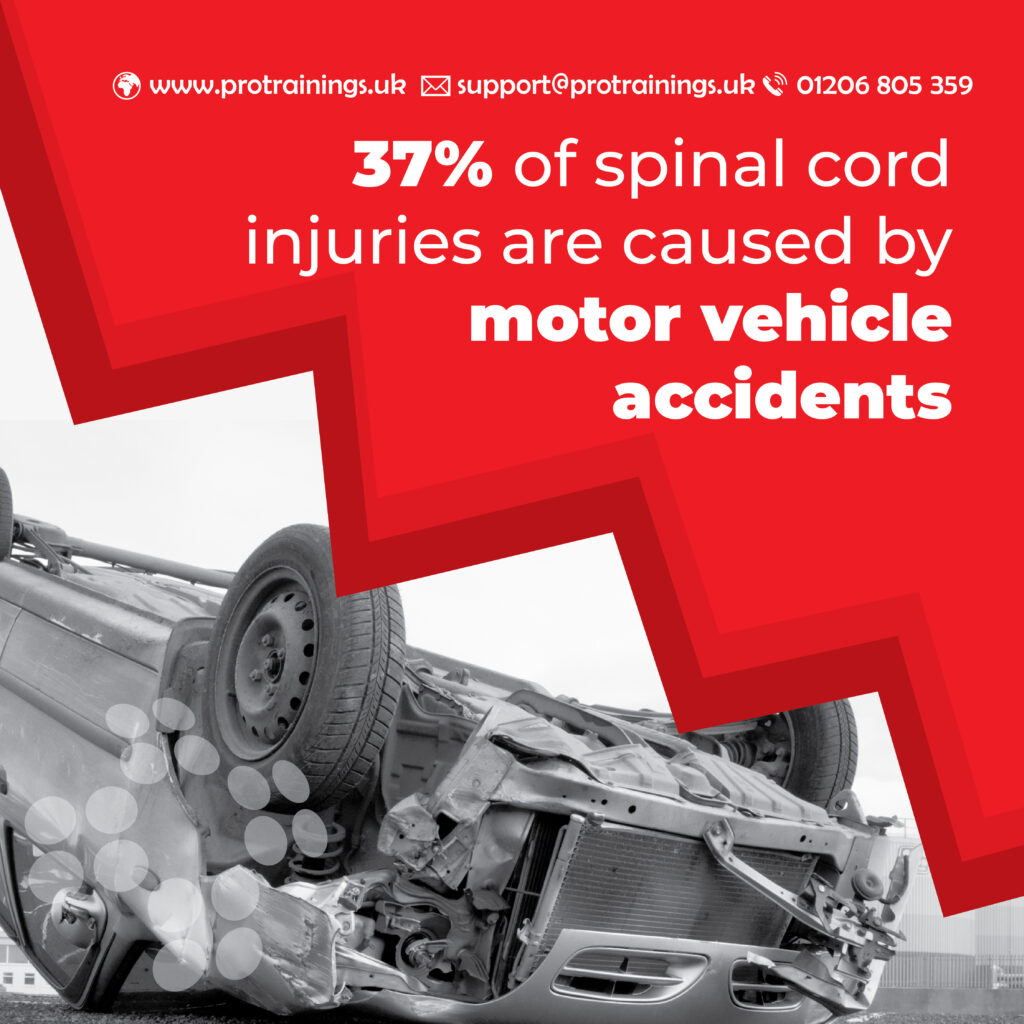
Quickly spotting potential spinal injuries is key to avoiding further harm during transport. Over 37% of spinal cord injuries are caused by motor vehicle accidents, while falls account for about 31% [5].
Common Signs of Spinal Injury
Be alert for these symptoms:
- Loss or reduction of muscle movement
- Numbness or tingling in the arms or legs
- Difficulty breathing, especially with upper cervical injuries
- Odd positioning of the head or spine [6]
- Loss of bladder or bowel control
Also, watch for critical changes in motor and sensory function:
- Weakness or full paralysis
- Muscle stiffness or spasms
- Pain or pressure in the neck, head, or back
- Loss of sensation in hands, feet, or limbs [4]
Scene Safety Check
If you suspect a spinal injury, ensure the area is safe before acting:
- Initial Assessment
Look for risks like unstable structures, hazardous materials, or live wires. - Protection Measures
Use proper PPE before approaching the injured person. Follow the ABCDE assessment:- Check for catastrophic bleeding
- Assess the airway while keeping the spine immobilized
- Evaluate breathing
- Check circulation
- Conduct a neurological (disability) assessment
- Consider environmental factors [7]
Emergency Services Contact
When calling 911, provide clear and detailed information:
- Exact location, including nearby landmarks
- How the injury occurred
- Number of people injured
- Symptoms and level of responsiveness
- Any hazards at the scene
If the person is conscious, encourage them to remain still unless there’s immediate danger. While waiting for emergency responders, perform chest-compressions-only CPR if necessary, ensuring the spine stays aligned [8].
Once help is on the way, focus on stabilizing the injured person.
Patient Stabilization
Keep the spine stable to avoid further injury by maintaining a neutral alignment and minimizing movement.
Head and Neck Support
Follow these steps to stabilize the head and neck:
- Firmly hold the mastoid processes.
- Cup the occiput to support the head.
- Keep the spine in a neutral position.
- Provide steady support without pulling or traction.
If you’re working alone, use your knees to brace the head, freeing your hands for managing the airway.
Neck Collar Application
1. Size Assessment
Determine the correct collar size by measuring the space between the shoulder and chin using your fingers.
2. Application Technique
While one person maintains manual stabilization, another should:
- Slide the back portion of the collar under the neck.
- Position the front piece under the chin and secure it with Velcro, ensuring it’s snug but not overly tight.
- Confirm the collar limits movement without affecting the patient’s ability to breathe.
3. Final Check
Make sure the collar supports the chin, reaches the shoulders, and does not interfere with breathing.
Spine Alignment
Preserve spinal alignment to avoid worsening the injury. Stop any attempts at realignment immediately if the patient experiences increased pain, new neurological issues, muscle spasms that affect breathing, or resistance to movement.
If alignment is necessary, proceed slowly while monitoring neurological responses. Even after applying a cervical collar, continue manual stabilization to ensure extra protection during transport.
Soft cervical collars are unsuitable for trauma cases – only use rigid collars designed for spinal immobilization [9].
Once stabilized, prepare for transport by selecting the right equipment and organizing your team.
sbb-itb-5e7756f
Transport Preparation
Equipment Selection
Choosing the right equipment is critical for safe transport. A properly fitted hard collar, paired with blocks and tape, is key for cervical spine protection [10]. For full-body support, consider these options:
- Backboard: Offers rigid support and makes it easier to transfer patients between surfaces, ensuring the spine stays protected during transport [10].
- Scoop Stretcher: Splits lengthwise to minimize movement during loading, making it ideal for situations where patient access is limited [10].
- Vacuum Mattress: Molds to the patient’s body, providing better comfort and pressure distribution compared to rigid boards, which helps reduce pressure points [1].
For seated patients who need to be removed quickly, the Kendrick Extrication Device (KED) is a specialized tool for spinal protection [10]. Once you’ve selected the equipment, focus on team positioning to maintain spinal stability during movement.
Team Positioning
The positioning technique depends on the situation and the number of available team members. Here are the two main methods:
- 6+ Lift Technique
This method requires seven team members:- One leader at the head to stabilize the cervical spine.
- Three rescuers on each side, positioned at the chest, pelvis, and legs, to evenly distribute the lifting force.
- Best suited for heavier patients [12].
- Lift-and-Slide Method
Designed to minimize spinal motion, this approach needs four team members:- One person stabilizes the head and neck.
- Three rescuers straddle the patient to lift the upper torso, hips, pelvis, and legs [12].
Team Communication
Clear and precise communication is essential to avoid unnecessary spinal movement and ensure everyone stays coordinated. The team leader, typically positioned at the patient’s head, should:
- Clearly announce each step.
- Use simple, straightforward commands.
- Confirm team readiness before any movement.
- Signal both the start and end of each maneuver.
“When implementing spinal motion restriction, all members of the interprofessional health care professional team must be familiar with their preferred technique and exercise good communication to execute the technique properly and reduce excessive spinal motion.” – Kristopher Milland [11]
Blunt traumatic injuries result in about 54 spinal cord injury cases per million people annually in the United States [11]. Proper preparation and coordination are crucial to prevent further injury during transport. With the equipment chosen and the team aligned, the next step is focusing on transfer methods.
Transfer Methods
After stabilizing the patient and preparing the team, the next step is safely transferring the patient without causing further harm. Moving a patient with a spinal injury requires careful techniques, tailored to the patient’s position and the environment.
Log Roll Technique
The log roll method ensures the body moves as a single unit to protect the spine. This approach requires 5–6 trained individuals working in sync.
- Setup: Assign roles. A leader at the head manages cervical spine control, while three team members support the shoulders, hips, and legs. One additional team member handles the backboard.
- Execution: Under the leader’s guidance, roll the patient as a single unit, maintaining neck alignment. The patient’s arms should either rest at their sides or cross over their chest to avoid interference. Alternative techniques are available for seated or water scenarios.
Seated Patient Transfer
When a patient is seated, such as in a car or chair, maintaining spinal alignment is key. Use specialized equipment for a smooth transfer:
- Position a transfer surface at a 45° angle.
- Secure a transfer belt around the hips or buttocks.
- Employ slide boards to minimize friction.
- Maintain constant cervical spine stabilization throughout.
Studies confirm that using proper transfer devices can help reduce the risk of additional injuries.
Water Rescue Transfer
Water rescues come with unique challenges, requiring specific tools and methods.
- Initial Stabilization: Secure a personal flotation device (PFD), protect the airway from water, and keep the spine aligned despite water movement.
- Equipment: Use tools like a Sked stretcher with inflatable sides or a floating Stokes basket, ensuring all gear is rated for water rescue.
Water rescue zones are divided into three areas:
- Cold Zone: Staging and preparation.
- Warm Zone: Support operations.
- Hot Zone: Direct interaction with the patient in the water.
When moving the patient from water, focus on controlled, efficient actions while maintaining spinal protection. Proper tools and trained personnel play a crucial role in improving outcomes in these scenarios [13][14].
Transport Security
During transport, it’s crucial to keep the patient immobilized to prevent further injuries. This involves maintaining spinal alignment, protecting pressure points, and managing body temperature.
Straps and Blocks
Use restraints to limit spinal movement and maintain proper alignment. Spinal immobilization helps reduce unnecessary motion of the spinal column [15].
Here’s how to ensure proper security:
- Use a correctly sized semi-rigid collar.
- Place the patient on a scoop stretcher with a slight 10° tilt.
- Secure the head using head blocks and tape.
- Consider using a vacuum mattress for added stability.
Vacuum mattresses are especially effective as they provide excellent stability and limit movement, even around the head [10].
Pressure Point Protection
Prolonged time on rigid surfaces can lead to pressure sores [2]. To avoid tissue damage:
- Pad key contact areas like the occiput, shoulder blades, sacral region, and heels.
- Use a vacuum mattress to distribute pressure evenly [10].
- When transferring, place a protective pad or towel on boards to reduce friction [16].
Temperature Control
Patients with spinal cord injuries often struggle with temperature regulation [17]. Adjust temperature management based on weather conditions:
In Hot Weather:
- Apply cold compresses to the face every 15–20 minutes [19].
- Ensure there’s proper ventilation.
- Keep the patient out of direct sunlight.
- Use cooling vests if available [18].
In Cold Weather:
- Limit exposure to cold conditions [18].
- Add insulating layers.
- Use warming blankets.
- Ensure the patient stays dry.
“The most important thing is to avoid extreme temperatures.” – Shirley Ryan AbilityLab – Spinal Cord Injury Team [17]
Conclusion
The steps outlined above ensure a well-coordinated and safe transfer for patients with spinal injuries. Precision and proper training are crucial to safeguard the patient and avoid further harm.
Training Requirements
ProTrainings Europe (https://protrainings.uk) offers courses focused on spinal injury management techniques. Their training highlights practical experience with tools like spine boards, cervical collars, and vacuum mattresses.
“When an athlete is suspected to have a spine injury, every moment and every movement counts”, says Tory Lindley, MA, ATC, NATA President [20].
To stay prepared, teams should:
- Regularly refresh their skills
- Practice emergency scenarios
- Keep certifications up to date
- Document all training activities
These practices support the essential steps outlined next.
Step Review
Key actions for safe spinal injury transport include:
Initial Response
- Ensure the scene is safe
- Maintain spinal and airway alignment
- Apply a cervical collar
Immobilization
- Use the right equipment
- Protect pressure points
- Secure the head
- Monitor breathing regularly
Transport Considerations
- Choose the transport method based on the situation
- Control the patient’s temperature
- Allow for side-to-side rotation if needed
- Keep monitoring devices within reach
Careful handling and proper positioning help minimize discomfort and avoid complications. Prompt transport to a medical facility, while maintaining immobilization, is critical for the best outcomes [3]. By following these steps, teams uphold their commitment to patient safety throughout the process.
The post Emergency Transport for Spinal Injuries: Key Steps appeared first on Online Health & Safety Training Courses | ProTrainings Europe.
]]>The post Common First Aid Training Questions Answered appeared first on Online Health & Safety Training Courses | ProTrainings Europe.
]]>- OSHA Requirements: Every workplace must have at least one trained first aid responder. High-risk industries may need more.
- CPR & AED Skills: CPR and AED use can double or triple survival rates for cardiac arrest victims. Certifications should be renewed every 1-2 years.
- Injury Response Basics: Learn how to handle burns, cuts, fractures, and allergic reactions effectively.
- Certification Renewal: Stay updated with regular recertifications and skill refreshers.
- Workplace Safety Impact: First aid training reduces accidents, improves response times, and boosts employee confidence.
First aid training not only saves lives but also ensures a safer and more prepared workplace. The article explores these aspects and provides actionable tips to implement effective training programs.
How to Perform CPR on Adults & Infants
Basic First Aid Training Elements
First aid training is a critical extension of workplace safety, enabling quick and effective responses during emergencies. This training helps minimize the severity of injuries until professional medical assistance arrives [3].
CPR and Life Support Skills
CPR is a must-know skill, especially since about 10,000 workplace cardiac arrests happen every year [3]. The American Red Cross emphasizes that proper CPR involves performing 100–120 chest compressions per minute, with a depth of at least 2 inches and correct hand positioning [3]. Surprisingly, only half of employees know where to find an Automated External Defibrillator (AED) at work [3]. Yet, when used alongside CPR, AEDs can increase survival rates by two to three times for cardiac arrest victims [5].
Injury Response Methods
First aid training also covers how to handle common workplace injuries. Here’s a quick guide to typical response actions:
| Injury Type | Primary Response Actions | Critical Considerations |
|---|---|---|
| Burns | Cool with running water; remove jewelry | Avoid breaking blisters or applying creams |
| Cuts/Wounds | Apply direct pressure; clean thoroughly | Use sterile dressings; monitor for bleeding |
| Fractures | Immobilize the area; support joints | Do not attempt to realign bones |
| Allergic Reactions | Assist with prescribed medication | Ensure emergency supplies are accessible |
These actions are the foundation for practical training exercises.
Practice Emergency Scenarios
Hands-on practice is essential for building confidence and coordination during emergencies [6].
“When you understand first aid, you’ll gain the ability to help those in need… This gives them the best opportunity for a positive outcome – and gives you the opportunity to change someone’s life for the better.” – American Red Cross [4]
Incorporate workplace-specific drills, such as:
- Team-based emergency response simulations
- Practicing communication protocols
- Locating and using emergency equipment
- Reviewing and debriefing after each scenario
These exercises ensure employees are prepared to handle real-life emergencies effectively.
First Aid Certificate Renewal Requirements
Keeping first aid certifications up to date is essential for maintaining workplace safety and ensuring readiness during emergencies.
Certification Time Limits
Most first aid and CPR certifications are valid for approximately two years [7]. However, healthcare professionals often need to recertify annually [8]. Key skills like CPR and AED usage should be reviewed more frequently, ideally every six months [9].
Skills Update Training
To stay prepared between recertifications, focus on refreshing these critical areas:
- Emergency protocols: Practice CPR, AED usage, and rescue breathing techniques.
- Managing severe injuries: Review methods for controlling heavy bleeding and preventing shock.
- Workplace-specific scenarios: Rehearse responses tailored to your work environment.
Keep an eye on certification expiration dates and plan renewals well in advance. Regular training updates not only sharpen skills but also contribute to a safer workplace.
“First‐aid courses should be individualized to the needs of the workplace.” – OSHA [9]
A consistent recertification process ensures your team is always ready to handle emergencies effectively.
sbb-itb-5e7756f
Workplace First Aid Laws
Ensuring compliance with first aid regulations is a key responsibility for creating a safe and lawful workplace. OSHA provides clear guidelines that employers must follow to guarantee proper first aid measures are in place.
First Aid Standards for Employers
First aid supplies should be stored in weatherproof containers, kept in good condition, and easily accessible to employees. The supplies must match the workplace’s size and the potential hazards, with regular checks to restock as needed.
“In the absence of an infirmary, clinic, or hospital in near proximity to the workplace which is used for the treatment of all injured employees, a person or persons shall be adequately trained to render first aid. Adequate first aid supplies shall be readily available.” – OSHA Standard 29 CFR 1910.151(b) [12]
This OSHA standard highlights the importance of having both trained personnel and accessible first aid resources.
OSHA Rules and Requirements
Employers must ensure that first aid kits meet ANSI/ISEA Z308.1-2021 standards [11]. Class A kits are recommended for handling common injuries, while Class B kits are better suited for workplaces with more complex or higher-risk environments [13].
Additionally, personnel responsible for first aid must maintain up-to-date certifications [10]. The number of trained staff should reflect the workplace’s size, layout, and specific risks, as well as its distance from medical facilities. High-risk industries, in particular, should conduct detailed risk assessments to determine the appropriate level of first aid readiness [11]. Access to healthcare professionals for consultation is also advised.
First Aid Training Results
Staff Skills and Confidence
Effective first aid training prepares employees to handle emergencies until professional help arrives [14]. It turns unprepared individuals into capable responders, boosting their confidence and improving teamwork [15]. This training strengthens collaboration and support among coworkers, ensuring a well-coordinated response during emergencies.
Workplace Safety Improvements
First aid training doesn’t just improve individual skills – it also enhances overall workplace safety. Here’s how:
| Safety Focus Area | Impact of First Aid Training |
|---|---|
| Risk Awareness | Employees become more aware of workplace hazards and the likelihood of injuries. |
| Preventive Behavior | Workers are more motivated to avoid injuries and take proactive steps to control risks. |
| Response Time | Emergencies are handled faster, leading to shorter recovery times and less downtime. |
| Accident Prevention | A stronger focus on safety practices leads to fewer workplace accidents. |
This training encourages a proactive approach to safety. Employees become more alert to hazards, take preventive actions, respond quickly in emergencies, and help reduce accidents [16]. It fosters a shared sense of responsibility for maintaining a safe work environment.
Investing in first aid training also benefits businesses. Faster emergency responses by trained staff can shorten recovery times and limit productivity losses [1]. Plus, employees feel valued when organizations prioritize their safety, which boosts morale [1][16].
Selecting First Aid Training Companies
Choosing the right first aid training provider is crucial for maintaining workplace safety and meeting OSHA requirements. According to OSHA, businesses must offer CPR and first aid training if medical facilities aren’t easily accessible nearby [17]. Here’s a guide to help you make an informed decision.
Training Certifications
Certification standards are a key factor when assessing first aid training providers. Programs should comply with OSHA’s First Aid Standard 29 CFR 1910.151 and follow the latest CPR guidelines [19]. Here’s what to look for:
| Certification Aspect | Requirements |
|---|---|
| Renewal Timeline | CPR certification updated annually; first aid certification every three years [17] |
| Course Content | Must include strategies for addressing common workplace injuries |
| Compliance | Aligns with National Guidelines for First Aid in Occupational Settings |
| Instructor Qualifications | Instructors should have verified teaching credentials and relevant experience |
It’s also important to ensure these certifications address the specific risks within your industry.
Industry-Specific Training
Different industries face unique risks, so training should be tailored accordingly. The National Safety Council stresses the importance of customizing training to handle industry-specific hazards [19]. For example, training should cover responses to injuries like severe bleeding, shock management, and treating wounds in critical areas, ensuring relevance to your workplace [18].
Online and Mixed Learning
First aid training is now available in various formats, offering flexibility while maintaining effectiveness. Research indicates that online learning can be as effective as traditional classroom settings [20]. Here are the main options:
| Training Format | Benefits | Considerations |
|---|---|---|
| Online Only | Cost-effective, flexible schedules, and self-paced learning | Limited hands-on practice opportunities |
| In-Person | Hands-on practice, direct instructor feedback, and peer interaction | Higher costs and fixed schedules |
| Blended Learning | Combines online learning with in-person skills practice | Requires both online and in-person attendance |
To ensure the training meets your needs, confirm that online certifications align with your workplace safety requirements [20].
Conclusion
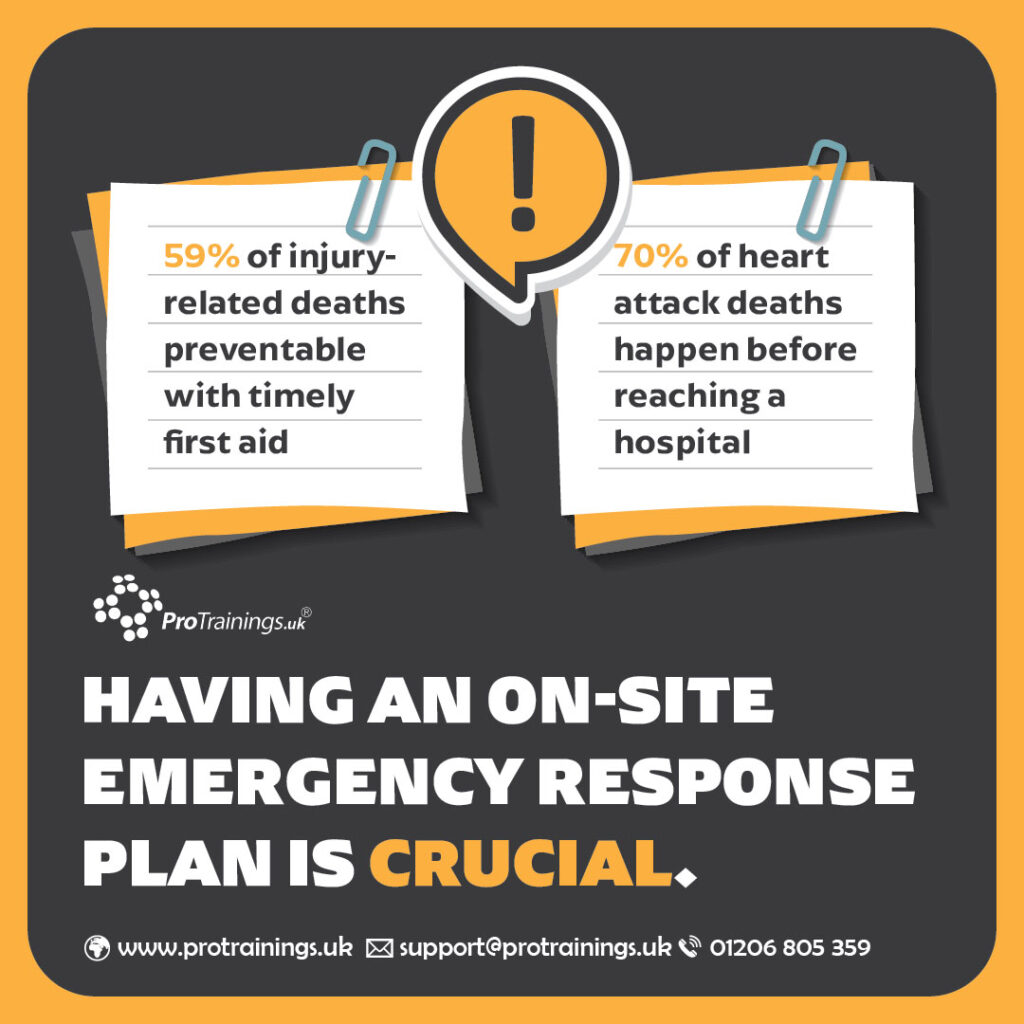
First aid training plays a key role in ensuring workplace safety and supporting employee well-being. With 70% of heart attack deaths happening before reaching a hospital [2] and 59% of injury-related deaths preventable with timely first aid [21], having an on-site emergency response plan is crucial.
Its benefits go beyond immediate emergencies. Companies that provide thorough first aid training often report better safety outcomes. For instance, survival rates for workplace cardiac arrests can rise from 5–7% to as high as 60% when an AED is used by a trained responder [22].
However, there are gaps in preparedness. Only 38% of Americans feel confident managing workplace emergencies, and 55% say their employers don’t offer regular training [22]. Organizations that invest in first aid programs see tangible results, including faster recovery times, reduced hospital costs, and lower absenteeism [21].
Here’s how to make first aid training programs more effective:
| Focus Area | Action Steps |
|---|---|
| Program Design | Tailor the curriculum to workplace-specific risks and evidence-based practices [23] |
| Training Delivery | Use hands-on practice and scenario-based exercises [23] |
| Maintenance | Offer regular refresher courses and certification renewals [21] |
| Equipment | Ensure first aid supplies are up-to-date and easy to access [22] |
“First aid training serves as a critical line of defense against workplace injuries and medical emergencies”, says Vector Solutions [21]. This training empowers employees to respond effectively when it matters most.
Additionally, over 65% of employees view companies offering CPR/AED or first aid training more positively [22]. Beyond safety, this commitment strengthens workplace culture and fosters trust.
The post Common First Aid Training Questions Answered appeared first on Online Health & Safety Training Courses | ProTrainings Europe.
]]>The post How to Conduct a Workplace Risk Assessment appeared first on Online Health & Safety Training Courses | ProTrainings Europe.
]]>- What is a Risk Assessment?
A structured method to spot hazards, assess risks, and decide on safety controls. - Why It Matters:
- Prevents accidents and injuries.
- Reduces costs from incidents and fines.
- Improves workplace efficiency.
- Legal Requirements:
- Document hazards and controls.
- Follow OSHA’s hierarchy of controls: Eliminate hazards, use engineering solutions, and provide PPE.
- 5 Key Steps:
- Identify hazards (e.g., tripping risks, chemical exposure).
- Assess risk levels using a matrix.
- Apply safety controls (e.g., lifting aids, protective gear).
- Document findings and actions taken.
- Regularly update the assessment.
- Tools and Training:
Use risk management software and employee training programs to simplify and strengthen the process.
What is Risk Assessment?
Definition and Purpose
A workplace risk assessment is a structured approach to identifying potential hazards and determining ways to address them. As healthyworkinglives.com explains:
“A risk assessment is a systematic method of looking at work activities, considering what could go wrong, and deciding on suitable control measures to prevent loss, damage or injury in the workplace.” [4]
The goal goes beyond just meeting safety regulations. It helps:
- Spot risks to avoid accidents
- Safeguard employees and property
- Improve workplace efficiency
- Save money by reducing incidents
When employees are actively engaged in safety efforts, accident rates can drop from 26% to 14% – a 46% decrease [3].
Legal Requirements
OSHA mandates that employers document risk assessments and follow a structured evaluation process.
- Hazard Assessment Documentation
Employers must keep written records of workplace hazard assessments, as required by OSHA 1910.132(d) [2]. - Systematic Evaluation Process
This involves regular inspections, reviewing Safety Data Sheets, consulting employees, putting controls in place, and continuously monitoring safety measures [5]. - Control Hierarchy
Employers should prioritize safety measures in this order:- Remove or replace hazards
- Use engineering solutions
- Apply administrative controls
- Provide Personal Protective Equipment (PPE) [5]
Workplaces with formal health and safety committees, especially those including union representatives, report fewer injuries compared to those without such collaborative systems [3].
This framework provides a solid foundation for carrying out effective workplace risk assessments.
OSHA Hazard Identification And Risk Assessment In 6 Minutes
Getting Started
An effective risk assessment starts with a well-prepared team and the necessary materials.
Building Your Team
Bring together a team with diverse expertise to thoroughly evaluate potential hazards.
Here’s who you’ll typically need:
- Assessment Lead: Someone skilled in risk assessment methods.
- Department Manager: The person in charge of the area being assessed.
- Workers’ Representatives: Employees familiar with the tasks being evaluated.
- Subject Matter Experts: Specialists in areas like electrical, chemical, or ergonomic safety.
Each team member plays a key role in identifying and addressing hazards effectively.
“successful risk assessments depend on the compliance officer knowing the business” [6]
For small businesses lacking in-house expertise, OSHA offers a free and confidential On-site Consultation Program to help with safety assessments [1].
Once your team is ready, gather the necessary tools and documents to kick off the process.
Required Materials
Here’s what you’ll need to prepare:
Documentation:
- Risk assessment records (RAMS, past evaluations, checklists, SDS, maintenance logs, and incident reports).
Tools:
- A digital camera or smartphone.
- Measuring devices.
- Personal Protective Equipment (PPE) for the team.
- Materials for taking notes.
- Floor plans or site maps.
Before starting, hold a briefing to go over:
- The objectives of the assessment.
- Assigned roles for each team member.
- The timeline for completing tasks.
- Any known hazards that need attention.
sbb-itb-5e7756f
5 Steps of Risk Assessment
1. Identify Workplace Hazards
Start by spotting potential risks in your workplace. Look for physical, chemical, and ergonomic issues that might harm employees.
Check your workplace and note hazards like:
- Tripping risks from cluttered areas
- Chemical exposure dangers
- Equipment in need of maintenance
- Strain from repetitive tasks
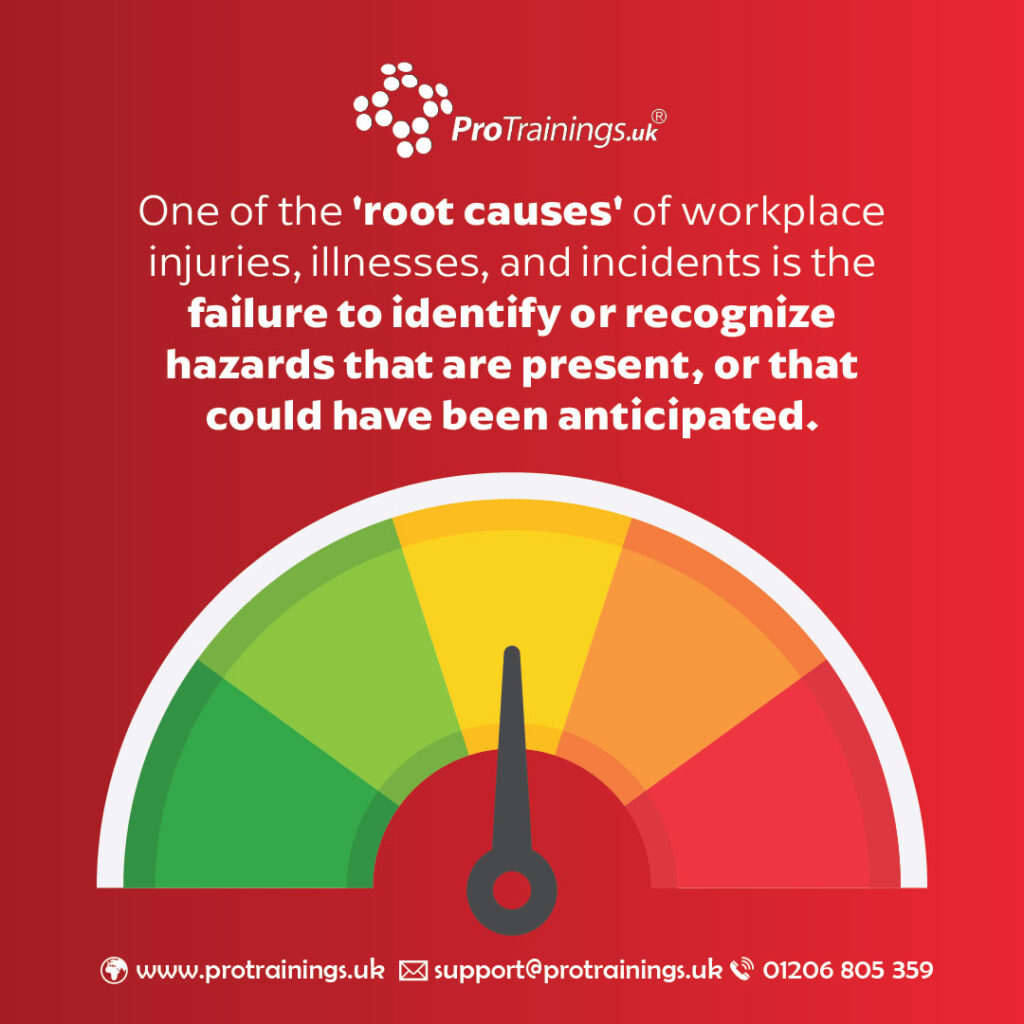
“One of the ‘root causes’ of workplace injuries, illnesses, and incidents is the failure to identify or recognize hazards that are present, or that could have been anticipated.” – Occupational Safety and Health Administration [1]
Review safety data sheets (SDS) and product labels to zero in on chemical risks. In March 2023, OSHA emphasized identifying tasks that might lead to skin exposure to chemicals [1].
Once hazards are listed, evaluate their potential impact.
2. Assess Risk Levels
Next, determine the likelihood and severity of each hazard. A risk assessment matrix can help you prioritize effectively.
| Probability | Minor Impact | Moderate Impact | Major Impact |
|---|---|---|---|
| High | Medium Risk | High Risk | Critical Risk |
| Medium | Low Risk | Medium Risk | High Risk |
| Low | Very Low Risk | Low Risk | Medium Risk |
Evaluate risks by considering:
- How likely the hazard is to occur (e.g., 61–90% for likely events)
- The severity of possible harm
- How many workers are exposed
- How often exposure happens
For instance, if a worker frequently lifts heavy castings:
- Probability: Occasional (3 points)
- Severity: Critical (3 points)
- Risk score: 9 (Severe risk) [7]
3. Implement Safety Controls
Use the hierarchy of controls to address risks:
- Eliminate the hazard entirely
- Substitute with a safer option
- Apply engineering solutions
- Use administrative measures
- Equip workers with personal protective equipment (PPE)
Practical examples include:
- Reducing carrying distances by relocating boxes
- Installing lifting aids
- Providing protective footwear like steel-toed boots [7]
Once controls are in place, it’s time to document everything.
4. Document Your Findings
Keep a detailed record of hazards, risk levels, and the steps you’ve taken to manage them. If your organization has five or more employees, this documentation is legally required [9].
Include:
- Clear descriptions of hazards
- Risk levels before and after applying controls
- Specific control measures
- Assigned responsibilities
- Timelines for implementation
5. Revisit and Update Your Assessment
Risk assessment isn’t a one-and-done task. Regular updates are essential:
- Do it annually at a minimum
- Reassess after accidents or near-misses
- Update when new equipment is introduced
- Adjust for major workplace changes
- Stay compliant with new regulations [8]
Keep an eye on indicators like:
- Employee turnover
- Absence due to illness
- Reports of stress or discomfort
Make adjustments quickly when changes occur or when workers provide feedback.
Common Issues and Solutions
Even the most thorough risk assessments can face challenges that undermine their effectiveness.
Addressing Key Problems
Research shows that 70% of change programs fail due to employee resistance [12]. Below are some common issues and practical ways to tackle them:
Confusion Between Hazards and Risks
One frequent mistake is treating hazards and risks as the same thing. A hazard refers to the source of potential harm, while risk measures the likelihood and severity of that harm occurring [11]. For instance, instead of broadly referencing hydrochloric acid, specify the risk of chemical burns from improper handling.
Low Employee Participation
Employees often resist involvement in risk assessments due to concerns about job changes or unclear processes. To address this, establish open communication channels:
| Challenge | Practical Approach |
|---|---|
| Fear of job changes | Clearly explain the purpose and benefits of assessments |
| Lack of feedback | Introduce digital suggestion boxes and host regular workshops |
| Knowledge gaps | Offer targeted training to address specific concerns |
Assessing Risks from the Office
Relying solely on office-based evaluations can lead to critical oversights. The Occupational Safety and Health Administration highlights the importance of on-site observations and direct worker input for accurate assessments [13].
By addressing these problems, you can create a stronger foundation for effective risk management.
Tips for Success
To ensure successful risk assessments, consider the following strategies:
Establish a Review System
Set up bi-annual reviews for your risk assessments. Be ready to re-evaluate immediately when there are changes, such as new equipment, workplace layout adjustments, accidents, or updates to health and safety regulations [14].
Enhance Communication
“Regularly review risk assessments for relevance against current operations.” [14]
Include Mental Health Risks
Modern risk assessments should account for both physical and psychological hazards [10]. Be sure to evaluate stress levels, workloads, and other mental health factors.
Simplify Documentation
Avoid technical jargon. Use clear, straightforward language that everyone in the workplace can easily understand.
Adopt Technology
Invest in flexible risk management software to streamline processes [14]. These tools can help you track schedules, monitor control measures, gather employee feedback, log incidents, and manage training records efficiently.
Digital Tools and Training
Digital tools and professional training play a key role in improving risk management processes. U.S. employers spend around $1 billion every week on workers’ compensation costs [15].
Risk Assessment Tools
Digital tools simplify risk assessments for businesses of all sizes, helping them stay compliant with safety standards. Depending on your organization’s needs, here are some tool categories to consider:
| Software Category | Recommended Tools | Best Suited For |
|---|---|---|
| Enterprise Solutions | Nintex, Appian, EHS Insight | Large corporations with complex risk management needs |
| SME Platforms | Kissflow, Airtable, Denxpert | Small to medium-sized businesses looking for affordable options |
| Specialized Tools | CyberSaint, SafetyCulture | Industry-specific risk assessment requirements |
Key features of these tools include:
- Automated asset discovery and monitoring
- Risk scoring and evaluation automation
- Customizable risk registers and control libraries
- Integration with incident management systems
- Real-time reporting and analytics [18]
These tools, paired with effective training, strengthen risk management efforts.
ProTrainings Europe Services
Training is essential for reinforcing risk assessments. ProTrainings Europe (https://protrainings.uk) offers accredited courses tailored to various organizational needs. Their training stands out for realistic hazard simulations, standardized content, multi-language support, and flexible scheduling [15].
“Health & Safety training is more than ticking a box. It’s about courses that engage you so you remember what you’ve learned. It means staying up to date with the training through continued access to the videos and weekly refreshers by email. And learning whenever it’s convenient, from any location and any device.”
– ProTrainings Europe [17]
Modern platforms like SafetyCulture combine risk assessment tools with quick, easy-to-digest training modules. Employees can complete these at their own pace [16].
Digital training platforms also help organizations:
- Track employee progress
- Create compliance reports
- Update training content quickly to address new risks
- Keep detailed records for regulatory purposes [15]
Conclusion
Risk assessments play a key role in making workplaces safer, reducing accidents, and cutting costs. Companies with strong safety programs have seen a 53% drop in lost-time injuries [20].
To make risk assessments effective, they need to be updated regularly and paired with ongoing employee training. Using digital tools and certified training programs – like those from ProTrainings Europe – can strengthen safety practices and create lasting results. These efforts not only improve safety but also boost overall efficiency.
As OSHA highlights:
“Education and training are important tools for informing workers and managers about workplace hazards and controls so they can work more safely and be more productive” [20]
Risk assessments are more than just checklists; they can lead to real improvements in safety and cost savings. For instance, one industrial plant saw a 60% decrease in incidents within two years of implementing a safety program [19].
Sara Pratley of AlertMedia also underscores a key point:
“The best and most universal thing everybody can do is be informed” [21]
Workplace safety is always evolving. Combining detailed risk assessments with focused training and modern tools helps create safer, more efficient workplaces.
The post How to Conduct a Workplace Risk Assessment appeared first on Online Health & Safety Training Courses | ProTrainings Europe.
]]>The post 8 Best Practices for Managing Staff Certifications appeared first on Online Health & Safety Training Courses | ProTrainings Europe.
]]>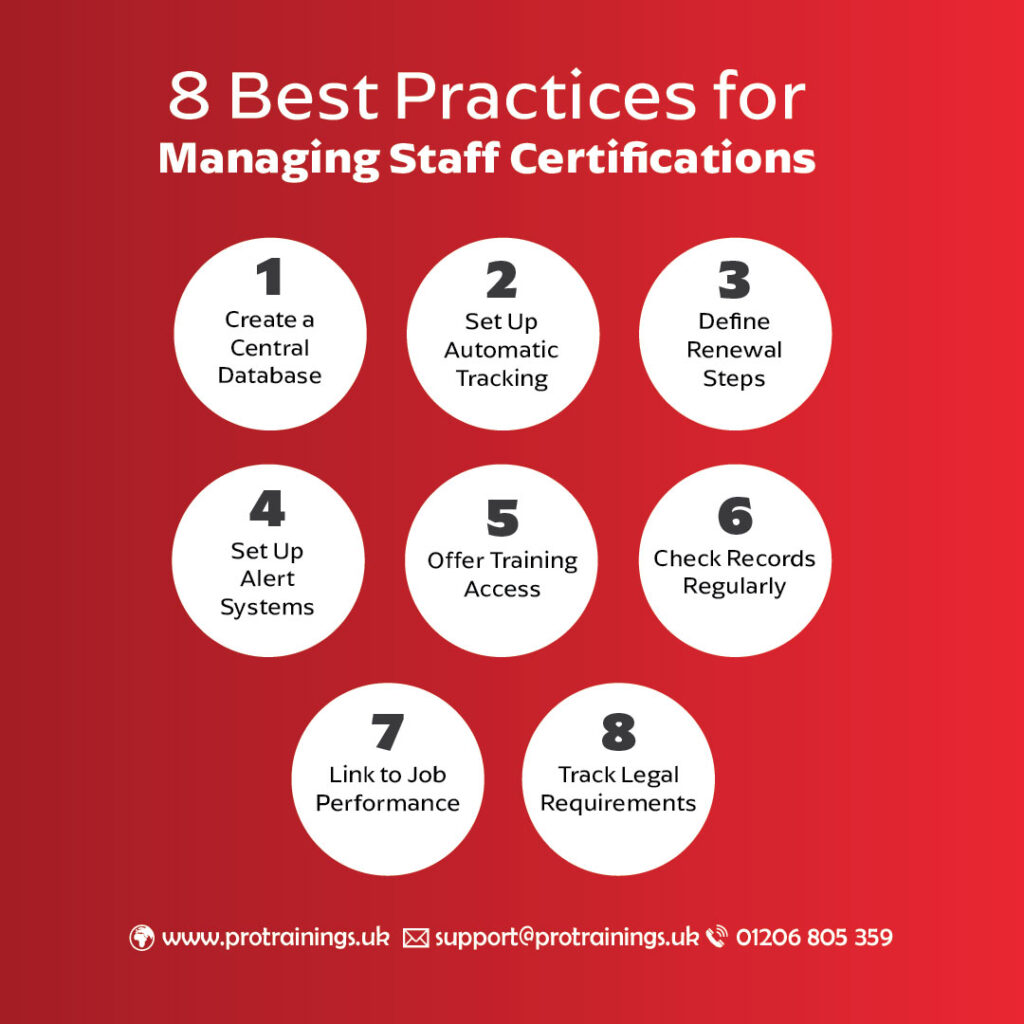
- Create a Central Database: Track all certification details in one place to improve compliance and reduce errors.
- Set Up Automatic Tracking: Use software to monitor deadlines and send reminders.
- Define Renewal Steps: Establish clear procedures for renewing certifications on time.
- Set Up Alert Systems: Use emails, app notifications, and Slack/Teams messages to prevent missed deadlines.
- Offer Training Access: Provide easy access to training resources to keep certifications current.
- Check Records Regularly: Perform monthly and annual reviews to ensure compliance.
- Link to Job Performance: Align certifications with job roles and reward compliance.
- Track Legal Requirements: Stay updated on regulation changes and maintain accurate reports.
Quick Overview:
| Practice | Key Benefit |
|---|---|
| Central Database | Simplifies data management and improves accuracy |
| Automatic Tracking | Reduces admin work and ensures timely renewals |
| Renewal Steps | Keeps certifications up-to-date |
| Alert Systems | Prevents missed deadlines |
| Training Access | Ensures compliance through accessible learning |
| Regular Record Checks | Identifies and fixes compliance gaps |
| Link to Job Performance | Boosts employee growth and morale |
| Legal Requirement Tracking | Maintains compliance with industry standards |
By implementing these steps, you can save time, reduce workplace risks, and ensure your organization stays compliant.
Best Practices for ISO 9001 Certification
Create a Central Database
Setting up a centralized digital database can help you achieve up to a 95% compliance rate [1]. Here’s what your database needs to track and why it’s crucial for your organization.
Key Information to Track
Your certification database should include the following details for every employee:
| Component | Details to Include |
|---|---|
| Personal Information | Full name, employee ID, department, role |
| Certification Details | Type, issuing body, certification number |
| Timeline Data | Issue date, expiration date, renewal deadlines |
| Training History | Completed courses, scores, instructor names |
| Verification Status | Current status, validation method, last audit date |
| Compliance Requirements | Industry standards, regulatory requirements |
Digital credentialing platforms, which are expected to grow to $6.32 billion by 2033 [1], often use blockchain technology for secure and tamper-proof verification.
Why Centralized Data Matters
Centralizing your certification data offers several key benefits and can save your organization significant costs. Poor data management can cost businesses up to $14 million annually and $20,000 per sales representative [4].
“Centralized data is a necessary competitive advantage for any organization; it supports an organization’s need for clean, reliable information that is current and accurate.” – Data Ideology [3]
Here are some of the major advantages:
- Better Security: Protect sensitive certification data with strong encryption and access controls [2].
- Faster Access: Quickly retrieve records through digital portals, saving time and effort [5].
- Stronger Compliance: Stay on top of regulatory requirements with systematic tracking [2].
- Fewer Errors: Eliminate duplicate records and reduce inconsistencies across departments [4].
To maximize efficiency, integrate your database with existing HR and learning management systems. Regularly audit your security measures, enforce strict access controls, encrypt stored data, automate backups, and have a solid incident response plan in place [2].
Set Up Automatic Tracking
Automated tracking reduces admin tasks and improves accuracy, making it easier to stay on top of certifications.
Key Features to Look for in Tracking Software
When choosing certification tracking software, prioritize tools with these features:
| Feature Category | Key Functionality | Business Impact |
|---|---|---|
| Automated Assignments | Automatically assigns training based on roles | Saves time by reducing manual work |
| Real-time Monitoring | Tracks compliance status live | Helps avoid missed certifications |
| Custom Workflows | Automates approval processes | Simplifies verification steps |
| Mobile Access | Accessible across devices | Keeps staff engaged and informed |
| Testing Integration | Offers customizable quizzes | Ensures employees retain knowledge |
Tools like PowerDMS bring these features to life by making certification processes accessible for all staff and offering customizable tests to measure understanding [6]. For the best results, ensure your software integrates well with HR systems to maintain consistent and accurate data.
Link Your HR Systems
Connecting your HR systems with certification software helps unify data and eliminates duplicate entries.
Here’s what to consider:
- Check System Compatibility
Review your current HR tools to ensure seamless integration. For example, TimeClock Plus works with over 100 payroll solutions, including ADP, QuickBooks, and Paychex [6]. - Set Up Data Synchronization
Platforms like Connecteam show how integration can streamline workflows. Their QuickBooks Payroll connection enables real-time updates for certification status, time tracking, and scheduling [6]. - Implement Strong Security Measures
Protect your data with these key steps:- Use encrypted data transfers
- Apply role-based access controls
- Conduct regular security audits
- Follow data protection laws (e.g., GDPR)
To ease the transition, consider running a pilot program before rolling out the system fully. This allows you to gather feedback and make adjustments while minimizing workflow disruptions.
Define Renewal Steps
Having clear renewal steps helps ensure certifications stay up to date and compliant.
Set Standard Procedures
| Renewal Phase | Key Actions | Timeline |
|---|---|---|
| Early Planning | Start tracking credits and requirements | Right after certification |
| Documentation | Collect and verify necessary materials | A few months before expiration |
| Submission | Submit renewal applications and fees | At least 30 days before expiration |
| Verification | Confirm renewal and update records | Within 1 week of approval |
“It is your responsibility to submit CPE information and documentation in advance of your certification’s expiration date. To ensure your application is processed in time, please allow 30 days for processing, from the time of completed submission.” – GIAC Certifications [7]
Key tips to follow:
- Submit renewal applications at least 30 days before the expiration date.
- Regularly track completed continuing education credits to avoid last-minute issues.
Integrating these steps with automated tracking systems can make the process smoother. Once the procedures are in place, assigning responsibilities ensures everything runs efficiently.
Define Staff Roles
Assigning clear roles ensures accountability and smooth handling of renewals.
- Assign Primary Responsibilities
Create a team or assign specific staff members to manage certification renewals. - Establish Support Structure
Use a tiered system where managers assist with tracking and completing renewals. - Specify Authority Roles
Clearly define who is responsible for approving renewals, processing payments, updating records, and handling compliance reporting.
Using policy management software can simplify access to renewal procedures and requirements, ensuring everyone understands their role in keeping certifications compliant.
The next section will focus on alert systems to help prevent missed deadlines and lapses in certification.
Set Up Alert Systems
An effective alert system ensures that staff and managers stay informed about certification renewals. By using multiple notification channels, you can ensure critical updates reach the right people at the right time.
Use Multiple Alert Types
Combining different alert methods helps improve communication and ensures no one misses important deadlines. Here’s a quick breakdown:
| Alert Channel | Primary Use | Key Benefit |
|---|---|---|
| Email Notifications | Detailed renewal instructions | Offers clear information and direct links |
| Slack/Teams Messages | Quick reminders | Reaches staff in their daily workflows |
| Platform Notifications | System-based tracking | Syncs with certification databases seamlessly |
For example, Rippling‘s Workflow Automator simplifies tracking by alerting employees and managers before deadlines approach [11]. You can customize triggers, actions, and recipients to match your organization’s needs.
Schedule Alert Timing
A well-timed notification schedule gives staff enough time to complete their renewal tasks. DigiCert CertCentral provides a practical example of a notification timeline [9]:
| Days Before Expiration | Action Type | Purpose |
|---|---|---|
| 90 days | Initial Notice | Allows early planning |
| 60 days | Progress Check | Tracks progress on renewals |
| 30 days | Urgent Reminder | Prepares for final submission steps |
| 7 days | Critical Alert | Highlights last chance for renewal |
| 3 days | Emergency Notice | Calls for immediate action |
“Sospes proactively alerts employees, supervisors and training managers when certifications are approaching expiration so scheduling training is easier than ever.” [10]
To make your alert system as effective as possible:
- Send personalized notifications with specific certification details.
- Include direct links to renewal tools or resources.
- Escalate alerts to supervisors if deadlines are missed.
- Monitor delivery rates to ensure messages are received.
- Offer quick status updates for better tracking.
For example, MuleSoft users can automate alerts by creating apps that check certification databases and send notifications based on expiration dates. These alerts can be grouped by urgency and delivered via email, CloudHub, or Slack.
sbb-itb-5e7756f
Offer Training Access
Making certification training easily accessible is key to staying compliant and keeping staff qualifications up to date. Modern approaches often combine online platforms with in-person instruction to create a balanced and effective learning experience.
Work with Training Providers
Choose training providers that meet industry standards while keeping costs manageable. Top providers often offer various delivery methods to suit different learning preferences and schedules. For example, OSHAcademy provides free access to course materials, allowing participants to purchase certificates only after completing the course [13].
Build Training Resources
Creating effective training materials takes thoughtful planning. A great example is DDI’s collaboration with RWS back in 1970. Their audit uncovered 45 accessibility gaps, leading to major improvements in their digital learning platform [14].
Here’s how to make training more effective:
- Conduct a needs assessment: Collect feedback from employees and supervisors to identify specific training needs [15].
- Design inclusive content: Make sure materials work with assistive technologies and include captions for multimedia content [14].
- Monitor performance: Track completion rates and gather feedback to refine the training process.
For instance, OSHAOutreachCourses adds value by offering a free OSHA 10-Hour course when participants purchase their 30-Hour Construction program [12].
Key elements for effective training resources include:
| Element | Implementation | Benefit |
|---|---|---|
| Multimodal Learning | Use video, text, and interactive tools | Supports different learning styles |
| Global Access | Translate materials and respect cultural nuances | Accommodates diverse teams |
| Flexible Pacing | Offer modular content | Allows learners to progress at their own speed |
| Progress Tracking | Use automated systems | Ensures compliance and tracks completion |
“We realized that if we wanted to move ahead with accessibility more quickly, we would need expert help.”
- Verity Creedy, DDI’s Vice President of Product Management [14]
Regularly updating training materials ensures they remain relevant and effective. By integrating these practices with a certification management system, companies can maintain compliance while reducing risks.
Check Records Regularly
Digital tracking systems can achieve impressive results, such as 95% certification compliance and 97% audit readiness [19]. Regularly reviewing records ensures your organization stays on track and avoids compliance issues.
Plan Review Dates
Although there’s no universal legal rule for updating health and safety training, industry standards suggest annual reviews [17]. Some certifications, like first aid, have specific renewal periods – typically every three years [17].
| Review Type | Frequency | Focus Areas |
|---|---|---|
| Monthly Scan | Monthly | Certifications expiring within 30 days |
| Deep Dive | Quarterly | Compliance gaps and certification status |
| Annual Audit | Yearly | Full certification portfolio review |
| Post-Change Review | As needed | Updates after workplace changes |
Modern tools like TalentGuard‘s certification tracking software simplify this process. They provide customizable views for tracking expirations over various timeframes, ranging from 15 days to a year [20]. These insights can drive immediate improvements to your processes.
Apply Review Findings
Use the results of your reviews to improve your certification management. Pairing regular reviews with automated tracking ensures your organization stays compliant.
“TalentGuard’s Certification Tracking software has significantly improved our certification management process. The real-time alerts and easy-to-use reporting tools have made staying compliant effortless and efficient” [19].
“Providing health & safety training once is simply not enough. With regular updates to legislation and changes within your business, refreshers are certainly important to keep your employee’s knowledge and understanding up to date” [17].
Here are three key actions to take based on your review findings:
- Spot Trends
Examine the records to find bottlenecks and adjust training schedules accordingly [16]. - Update Training Content
If workplace changes occur – like new equipment or updated processes – revise certification requirements and training materials to reflect those changes [18]. - Improve Tracking Systems
Use automated notifications and integrate tracking with your HR system to maintain a 90%+ certification renewal rate [19].
Link to Job Performance
Connecting certifications to job roles can boost both employee performance and career progression. Below, we break down how to align certifications with job responsibilities and highlight the importance of recognizing compliance.
Match Skills to Jobs
Align certifications with specific job roles to evaluate skills and identify leadership potential.
| Certification Level | Job Impact | Performance Indicators |
|---|---|---|
| Required | Core duties | Safety compliance, basic skills |
| Advanced | Higher capabilities | Process improvements, leadership |
| Specialized | Expert-level expertise | Problem-solving, innovation |
“Certifications are proof of your skill level. When you get a degree, say in accounting, it only proves that you have taken the courses. When you achieve a certification you have demonstrated your knowledge and expertise to a standardized level.”
Here’s how to strengthen the link between certifications and job performance:
- Conduct Skills Assessment: Use job-specific KSAs (knowledge, skills, and attitudes) to set certification requirements [22].
- Track Progress: Leverage LMS data and performance reviews to monitor employee growth [21].
- Update Requirements: Regularly reassess certification needs to keep up with changing job roles [23].
Reward Compliance
Recognizing certification achievements not only boosts morale but also drives better results. According to Deloitte, businesses that prioritize frequent recognition are 1.7 times more likely to excel [26].
“A strategic and well-regarded certification can help increase the chances of a promotion, a raise, or landing that more fulfilling, better-paying job” [24].
To effectively reward compliance:
- Career Advancement: Create clear pathways for certified employees to take on leadership roles or key projects [25].
- Professional Development: Provide financial support for employees to pursue additional certifications and training [25].
- Recognition Programs: Establish formal systems to celebrate certification milestones [25].
Research reveals that 37% of employees feel that personal recognition motivates them to deliver better work [27].
“There is nothing more powerful than showing the world (and reminding yourself) that you are a champion of lifelong professional self-development. Keep on learning, keep on growing – it’s the only way to stay relevant in a highly evolving, topsy-turvy world.” – Dawid Wiacek [24]
Track Legal Requirements
Staying compliant with certification regulations involves consistent monitoring and detailed reporting. According to recent data, 43% of Chief Ethics and Compliance Officers consider keeping up with new rules their biggest challenge [31].
Monitor Rule Changes
Keeping track of regulatory updates demands a structured plan to remain aligned with certification standards. Organizations often rely on these key practices:
- Weekly: Review official journals and ministry websites.
- Monthly: Check updates from trade associations and certification bodies.
- Quarterly: Audit internal policies for compliance.
- Biannually: Update training requirements to reflect changes.
The Health and Safety Executive (HSE) emphasizes the importance of regularly assessing safety programs to ensure they meet current standards [28].
“Whenever these assessments identify opportunities to improve the programme, employers, managers, and supervisors – in coordination with workers – should make adjustments and monitor how well the programme performs as a result.” – Health and Safety Executive (HSE) [28]
By consistently monitoring changes, organizations can produce timely and accurate compliance reports.
Create Status Reports
Automation is becoming a key tool in compliance tracking, with 45% of compliance officers prioritizing automated processes [31]. Platforms like SafetyCulture, rated 4.6/5 stars on Capterra, assist organizations in keeping certification records accurate and up-to-date [32].
Here are some essential elements of effective compliance reporting:
- Certification Status Dashboard
Use dashboards to track active certifications, renewal deadlines, and any compliance gaps. Document procedures and staff qualifications to prepare for audits [30]. - Compliance Metrics
Measure program success with leading indicators (e.g., training completion rates) and lagging indicators (e.g., compliance violations) [28]. - Regulatory Updates Log
Maintain a centralized database to document changes in certification requirements. Ensure all updates are dated and progress is tracked [30].
“Figuring out what’s involved in maintaining a particular certification will take some research on your part. It will also require some scheduling effort to make sure you meet deadlines associated with that credential.” – Ed Tittel [29]
Specialized software solutions can simplify this process by offering real-time alerts, automated tracking, and detailed compliance reporting.
Managing Staff Certifications Effectively
Keeping track of staff certifications is no small task, but efficient systems can make a big difference. In 2022, over 2.8 million nonfatal workplace injuries and illnesses were reported in the U.S. [34]. These numbers emphasize the need for taking proactive steps.
“TalentGuard’s Certification Tracking software has significantly improved our certification management process. The real-time alerts and easy-to-use reporting tools have made staying compliant effortless and efficient” [19].
Here are three key areas to focus on:
- Automated certification tracking: Streamline the process with software that connects to HR systems, cutting down administrative work while ensuring accurate record-keeping [33].
- Ongoing compliance training: Regular safety training can help reduce workplace risks and keep employees informed [34].
- Leadership involvement: Active participation from management reinforces compliance and sets the tone for the entire organization [8].
Beyond meeting regulations, using reliable certification tracking systems can lead to safer workplaces and fewer lost workdays. For example, in 2020 alone, workplace injuries resulted in 597,000 lost workdays [35].
Start by setting up a centralized database for certifications and automating reminders. Combine this with regular audits and verification processes to stay on top of industry standards [36]. This approach not only protects employees but also strengthens the organization’s ability to adapt and thrive.
The post 8 Best Practices for Managing Staff Certifications appeared first on Online Health & Safety Training Courses | ProTrainings Europe.
]]>The post Health and Safety Compliance: A Basic Guide appeared first on Online Health & Safety Training Courses | ProTrainings Europe.
]]>Key Takeaways:
- Why It Matters: Injuries cost U.S. businesses $171 billion in 2019.
- OSHA Basics: Follow the General Duty Clause, industry-specific standards, and training rules.
- Core Elements:
- Write clear safety policies.
- Identify and prioritize hazards.
- Provide regular, understandable training.
- Employer Duties: Offer free safety equipment, conduct inspections, and report incidents promptly.
- Worker Rights: Training in their language, safe tools, and protection from retaliation.
A strong safety program involves everyone, from management to workers, and uses tools like software for tracking and compliance. Start small: set up hazard reporting, train staff, and inspect regularly.
Main Safety Program Elements
Writing Safety Policies
Effective workplace safety starts with well-documented safety policies. Jake Woolfenden, Owner of Summit Safety Group, emphasizes:
“The policy must be actively implemented through daily safety audits, inspections, and prompt risk correction.” [2]
These policies should be easy to access and clearly communicated to everyone, making safety a priority. Policy documentation should cover:
- Defined roles and responsibilities
- Step-by-step procedures for managing hazards
- Emergency response plans
- Clear methods for reporting safety issues
Strong policies provide a solid framework for identifying and addressing hazards systematically.
Finding and Rating Hazards
Identifying hazards requires a structured process involving inspections, feedback from workers, and analyzing incidents. To prioritize safety concerns, organizations often use a hazard rating system like the ABC method:
| Rating | Severity | Required Action |
|---|---|---|
| A | Potential loss of life or body part | Immediate action required |
| B | Potential serious injury or illness | Urgent attention needed |
| C | Potential non-disabling injury | Elimination without delay |
Hazards can be identified by:
- Conducting regular workplace inspections
- Reviewing reports of incidents and near-misses
- Talking with workers about their safety concerns
- Evaluating non-routine tasks
- Considering potential emergency situations
This methodical approach works well alongside ongoing safety training to create a safer work environment.
Staff Safety Training
Regular and thorough training is essential. Inadequate training contributes to billions of dollars in ergonomic injury costs annually in the US [5]. ComplianceQuest highlights the importance of worker involvement:
“Safety management is for the workers, of the workers, and by the workers” [6]
Key training topics should include:
- Recognizing hazards
- Emergency response procedures
- Proper use of equipment
- Effective communication protocols
Training must be delivered in formats and languages that all employees can understand. Refresher courses are crucial to keep safety practices top of mind and to introduce updates on new equipment or procedures. Importantly, workers must feel safe reporting safety concerns without fear of retaliation [4].
Occupational Safety and Health Act
Safety Duties and Rights
Once safety policies and training are in place, understanding the roles and rights of everyone involved helps create a safer work environment.
What Employers Must Do
Under the OSH Act, employers are responsible for keeping the workplace safe and must provide safety equipment at no cost to employees.
| Equipment Type | Requirements | Update Frequency |
|---|---|---|
| Personal Protective Equipment (PPE) | Must comply with OSHA standards | Replace when worn or damaged |
| Safety Tools | Must be maintained and inspected | Follow regular maintenance schedule |
| Warning Systems | Use clear labels, signs, and color codes | Update when hazards change |
| Emergency Equipment | Must be easily accessible | Inspect monthly |
“Under the OSH Act, employers must provide a safe and healthy workplace for their employees.” – Morgan Lewis & Bockius LLP [9]
Employers are also required to report serious incidents to OSHA within specific timeframes:
- Work-related fatalities: within 8 hours
- Inpatient hospitalizations: within 24 hours
- Amputations or eye loss: within 24 hours [7][8]
While these responsibilities are clear, workers also play an active role in maintaining workplace safety.
What Workers Must Do
Workers are expected to follow safety protocols and are protected under federal law. Their rights include:
- Receiving safety training in a language they understand
- Using properly maintained equipment
- Accessing medical records related to workplace injuries
- Reviewing records of work-related injuries and hazard test results
- Requesting OSHA inspections when necessary
- Being protected from exposure to toxic substances
Workers must report hazards and unsafe conditions immediately. If their concerns are ignored, they can file confidential complaints with OSHA. Whistleblower protections are in place for 30 days following any alleged retaliation [1].
Safety Teams at Work
Collaboration is key to workplace safety. Safety teams serve as a link between management and workers, ensuring that safety measures are effectively implemented. Their responsibilities include:
- Conducting regular surveys and offering open channels for reporting
- Appointing safety captains for different departments
- Organizing training sessions focused on safety
- Investigating incidents and taking steps to prevent future occurrences [10]
Digital tools have made it easier to report and track safety concerns. Workers can quickly raise issues through these platforms, while safety teams can monitor and resolve them efficiently [11].
sbb-itb-5e7756f
Safety Program Management
Creating a system to manage safety programs effectively ensures that established policies and employee responsibilities are followed consistently. According to OSHA, workplace injuries can result in direct costs ranging from $1,000 to $20,000, with indirect costs reaching up to $40,000 [12].
Setting Safety Rules
Clear, accessible, and consistently enforced safety rules are essential for maintaining a secure work environment. OSHA research highlights a strong connection between detailed safety policies and safer workplaces [12].
| Safety Rule Component | Purpose | Implementation Method |
|---|---|---|
| Written Procedures | Provide clear task guidelines | Step-by-step documentation |
| Hazard Communication | Warn about potential risks | Use color-coded signs and labels |
| Emergency Protocols | Guide crisis response | Post evacuation routes clearly |
| Reporting Systems | Track incidents | Use digital reporting tools |
Addressing hazards based on their severity is critical. Immediate action should be taken to resolve high-risk issues.
“The main goal of safety and health programs is to prevent workplace injuries, illnesses, and deaths, as well as the suffering and financial hardship these events can cause for workers, their families, and employers.” [3]
These rules also provide a strong base for managing safety equipment effectively.
Safety Equipment Rules
Proper maintenance of safety equipment is key to preventing accidents and staying compliant with regulations. Regular inspections ensure that equipment remains in good working order.
Equipment inspection tips:
- Visual Inspections: Conduct daily checks before using equipment.
- Documented Reviews: Keep records of all maintenance activities.
- Critical Components: Prioritize high-risk parts during inspections.
- Replacement Schedule: Adhere to manufacturer-recommended timelines.
For instance, Volvo’s maintenance protocol advises visual checks of excavator undercarriages every 40 operating hours [13].
Routine care for equipment works hand-in-hand with regular safety reviews to ensure compliance and worker safety.
Safety Checks and Reviews
Regular evaluations help assess how well safety programs are working by using both predictive and performance-based metrics:
| Indicator Type | Metrics | Purpose |
|---|---|---|
| Leading | Participation rates, hazard reports | Identify potential risks |
| Lagging | Injury rates, compensation claims | Evaluate past incidents |
| Program Goals | Completion rates, training attendance | Monitor implementation progress |
Modern tools like myosh simplify tasks such as incident reporting, hazard tracking, inspections, and performance analysis [14].
“If you focus on achieving goals, monitoring performance, and evaluating outcomes, your workplace can progress along the path to higher levels of safety and health achievement.” [3]
Engaging employees in these reviews and striving for continuous improvement is essential. With around 2.8 million workers injured annually in the US [12], regular safety checks are vital for protecting employees and avoiding costly incidents.
Safety Resources
Maintaining a safe workplace goes beyond basic programs; it requires reliable tools and resources to ensure compliance and minimize risks effectively.
ProTrainings Europe: Training Programs
Industry-specific training is crucial for equipping workers with the certifications they need. Selecting training programs tailored to your sector ensures employees are prepared for the unique challenges of their roles:
| Industry | Required Training Types | Compliance Focus |
|---|---|---|
| Construction | Asbestos exposure, Equipment operation | HSE requirements |
| Manufacturing | Machine safety, Chemical handling | Process safety |
| Healthcare | Bloodborne pathogens, Patient handling | Medical protocols |
| Agriculture | Equipment safety, Chemical application | Worker protection |
For roles involving hazardous materials, specialized instruction is essential. These targeted programs align with the safety policies and regular evaluations discussed earlier.
Safety Forms and Lists
Organizations provide a range of safety documents, such as aerial lift inspection checklists, confined space entry permits, driver vehicle reports, employee injury forms, hot work permits, and lockout/tagout procedures. Resources like the Health and Safety Executive (HSE) self-inspection checklists help identify and address potential hazards.
Digital tools can further simplify compliance efforts, making safety management more efficient.
Safety Software Tools
VelocityEHS Accelerate Platform
This software streamlines incident management, inspections, and safety meetings. For example, Hunter Industries experienced notable benefits after adopting the platform:
“Ever since we implemented VelocityEHS, we have been able to take the time that we were once using dealing with the transactional aspects of EHS… and take that time to get out on the floor, engage with employees, and more proactively reduce our risk, which in turn reduces injuries and reduces our losses.”
– Katie Johanski, Director of Global Risk, Hunter Industries [15]
J. J. Keller’s Safety Management Suite
This tool offers flexible plans (Professional, Team, and Corporate) with features like:
- Safety plan creation
- Incident tracking
- Chemical management tools
- Training resources
- Audit capabilities
“J. J. Keller’s Safety Management Suite is easy to use, training materials are easy for employees to understand, and it is all in one place! The continued updates on changing regulations, ease of use, and tracking of incidents and training makes it useful regardless of the industry.”
– Kathleen Dixon, Food Safety & Compliance Manager, Select Harvest USA [16]
EHS Insight Software
Focused on improving safety programs, this platform includes:
- Work observation tracking
- Hazard assessment tools
- Compliance monitoring
- Training management
- Risk mitigation features [17]
These software solutions help businesses uphold safety standards, reduce administrative work, and stay updated on regulatory changes.
Summary
Key Safety Rules
Safety compliance works best when employers and employees clearly understand their responsibilities. For instance, one manufacturing company saw a 40% drop in workplace accidents within a year by following these principles [18].
| Component | Requirements | Impact |
|---|---|---|
| Risk Management | Regular assessments, hazard identification | Helps avoid accidents |
| Training Programs | Role-specific instruction, certification tracking | Builds employee skills |
| Policy Framework | Clear procedures, accessible documentation | Guides daily tasks |
| Monitoring System | Regular inspections, compliance audits | Keeps standards intact |
With these elements in place, you can lay the foundation for a strong safety program.
Getting Started
To build on existing safety policies and training, start with these practical steps:
- Set up a simple system for reporting hazards and incidents.
- Offer basic safety training that tackles common workplace risks.
- Develop clear safety protocols that align with OSHA standards.
- Schedule regular workplace inspections involving employees.
“Building a culture of safety requires a proactive approach, with most of the learning provided on the front end.” [19]
Making Safety Last
For long-term results, a commitment of 5-10 years from leadership is essential [19]. The key is to make safety easy to follow and personally relevant for employees.
“Accountability for safety should permeate every level of an organization, fostering a culture where safety isn’t just a requirement but a shared value.” [20]
Here are strategies to ensure safety becomes second nature:
- Involve employees in safety decisions and process improvements.
- Monitor leading indicators like training completion and audit results.
- Make safety resources available throughout the workplace.
- Hold monthly safety meetings to address new concerns.
The post Health and Safety Compliance: A Basic Guide appeared first on Online Health & Safety Training Courses | ProTrainings Europe.
]]>The post A Brief History of AED Units: Saving Lives One Shock at a Time appeared first on Online Health & Safety Training Courses | ProTrainings Europe.
]]>Saving Lives One Shock at a Time
Automated External Defibrillators (AEDs) are now a common sight in public spaces, workplaces, and schools, playing a crucial role in saving lives during sudden cardiac arrest (SCA) incidents. But how did these lifesaving devices come to be? The story of AEDs is a testament to the power of medical innovation, driven by the need to improve emergency response and reduce the staggering number of deaths caused by cardiac arrest.
The Early Days of Defibrillation
The journey toward AEDs begins with the development of defibrillation itself. In the late 19th century, researchers began experimenting with electricity’s potential to treat heart conditions. The first recorded use of electric shocks to restore a regular heartbeat came in 1899, when Swiss physiologists Jean-Louis Prevost and Frédéric Batelli demonstrated that electric currents could induce ventricular fibrillation (a dangerous, erratic heart rhythm) in animals and then reverse it.
1930s: The First Human Defibrillations
It wasn’t until the 1930s that defibrillation was used on humans. Dr. Claude Beck, a pioneer in cardiac surgery in the United States, successfully applied electrical shocks to restart the heart of a young patient during surgery in 1947. This was a significant breakthrough, but the equipment at the time was bulky and complex, making it impractical for use outside of hospital settings.
1960s: The Portable Defibrillator
In the 1960s, a Scottish surgeon named Dr. Frank Pantridge revolutionised emergency care with the introduction of the first portable defibrillator. Working in Belfast, Pantridge recognised the critical need for rapid intervention during cardiac emergencies. The result was a portable defibrillator that could be used by emergency medical teams in the field. While still weighing around 70 kg (150 lbs), it was a major step forward in bringing defibrillation to patients more quickly.
1970s: The Birth of the AED
As technology improved, the idea of a fully automated defibrillator began to take shape. The goal was to create a device that could not only deliver a shock but also analyse the heart rhythm and determine if a shock was necessary, all without the need for a highly trained operator.
The first AEDs began to emerge in the late 1970s, developed by researchers and engineers looking to make defibrillation more accessible. These early models were designed for use by emergency personnel, particularly those in ambulances, who often reached patients before they arrived at the hospital. The key innovation was the device’s ability to detect life-threatening arrhythmias, such as ventricular fibrillation, and only deliver a shock if needed, significantly reducing the risk of inappropriate shocks.
1980s and 1990s: Widespread Adoption
During the 1980s and 1990s, AED technology continued to evolve, becoming smaller, more affordable, and easier to use. The development of biphasic waveforms in the early 1990s—where the electrical shock is delivered in two directions across the heart—made defibrillation more effective while using less energy.
Public awareness of AEDs grew as governments and health organisations began pushing for their placement in public areas like airports, shopping centres, schools, and stadiums. Studies showed that quick access to defibrillation greatly improved the chances of survival for individuals suffering from sudden cardiac arrest, especially when combined with CPR.
Modern AEDs: User-Friendly and Life-Saving
Today’s AEDs are lightweight, portable, and designed to be used by anyone, regardless of medical training. Clear voice prompts guide the user through each step, from attaching the pads to administering the shock. Most modern AEDs also include CPR prompts to ensure that high-quality chest compressions are performed between shocks, improving the overall effectiveness of the response.
With the widespread placement of AEDs in public areas and the growing emphasis on CPR and AED training, more people are prepared to act quickly in the event of a cardiac emergency. The global effort to make AEDs available has dramatically increased survival rates for out-of-hospital cardiac arrests.
Looking Ahead: The Future of AEDs
Technology continues to improve, and the future of AEDs looks promising. Advances in data collection, wireless connectivity, and integration with emergency services mean that modern AEDs can transmit vital information to paramedics before they arrive, further improving outcomes.
With ongoing research and developments in cardiac care, the accessibility and effectiveness of AEDs will likely continue to grow, bringing life-saving technology to more people around the world.
Conclusion
The history of AEDs is one of innovation and progress, driven by a desire to save lives in critical moments. From the first experiments in defibrillation to the portable, user-friendly devices we see today, AEDs have transformed emergency response and helped to significantly improve survival rates for sudden cardiac arrest victims. Thanks to these innovations, countless lives have been saved, and the potential for more is greater than ever.
The post A Brief History of AED Units: Saving Lives One Shock at a Time appeared first on Online Health & Safety Training Courses | ProTrainings Europe.
]]>The post Enhance Your Career with Accredited Health and Safety Qualifications appeared first on Online Health & Safety Training Courses | ProTrainings Europe.
]]>Enhance Your Career with Accredited Health and Safety Qualifications
Why Health and Safety Qualifications Matter
In today’s competitive job market, having recognised qualifications can make all the difference in career progression. Health and safety training is not just about compliance; it is a crucial factor in improving workplace standards and boosting employability. Employers increasingly seek candidates who have demonstrated a commitment to safety, making accredited training a valuable investment.
First Aid at Work Certification
One of the most sought-after qualifications is the First Aid at Work (FAW) certification. This course teaches essential first aid skills, ensuring that employees can respond effectively to emergencies. Many employers prefer candidates with first aid knowledge, as it enhances workplace safety and ensures compliance with UK regulations.
COSHH Training for Workplace Safety
For those handling hazardous materials, a COSHH (Control of Substances Hazardous to Health) qualification is crucial. This training provides insight into safe handling procedures and risk management, helping businesses prevent workplace incidents related to hazardous substances.
Workplace Risk Assessment Qualification
Workplace risk assessments are a fundamental aspect of health and safety. Gaining certification in Workplace Risk Assessment demonstrates an ability to identify hazards, evaluate risks, and implement appropriate safety measures. Employers value this expertise, as it ensures compliance with legal requirements and reduces workplace accidents.
Mental Health First Aid Training
Another important qualification is Mental Health First Aid. As awareness of workplace mental health grows, companies increasingly recognise the importance of supporting employees’ well-being. Training in this area equips individuals with the skills to assist colleagues facing stress, anxiety, or other mental health challenges.
Fire Safety Awareness Certification
Fire safety is another critical area in which professionals can gain accreditation. A Fire Safety Awareness course educates employees on fire prevention, evacuation procedures, and the proper use of fire extinguishers. Businesses must comply with fire safety laws, making this certification highly beneficial.
Benefits of Investing in Accredited Training
Investing in accredited health and safety qualifications offers numerous benefits. It improves employability, as businesses prefer hiring staff who understand workplace safety regulations. Additionally, it increases confidence in dealing with emergencies, making employees more effective in their roles.
Why Choose ProTrainings UK?
At ProTrainings UK, we provide a wide range of health and safety training courses designed to meet industry requirements. Our certifications are recognised across various sectors, helping professionals advance their careers while ensuring businesses remain compliant with UK safety laws.
Take the Next Step in Your Career
Taking the step to gain a health and safety qualification not only enhances career prospects but also contributes to creating safer workplaces. If you are considering professional development, explore our range of accredited courses to find the right training for your needs.
The post Enhance Your Career with Accredited Health and Safety Qualifications appeared first on Online Health & Safety Training Courses | ProTrainings Europe.
]]>The post The Role of Blended Learning in Health and Safety Training appeared first on Online Health & Safety Training Courses | ProTrainings Europe.
]]>Introduction to Blended Learning
Blended learning is transforming the delivery of health and safety training. By integrating online learning with traditional in-person instruction, businesses can ensure their employees receive flexible, comprehensive, and engaging training. This approach combines the convenience of digital courses with the practical application of face-to-face sessions.
Why Choose Blended Learning?
Blended learning offers the best of both worlds. Online modules allow learners to complete theoretical training at their own pace, reducing time away from work. Meanwhile, in-person sessions reinforce knowledge through hands-on practice, ensuring better retention and real-world application of skills.
Many businesses find that blended learning reduces overall training costs while improving compliance with Health and Safety Executive (HSE) regulations.
How Blended Learning Improves Health and Safety Training
Health and safety training requires both theoretical knowledge and practical skills. Blended learning efficiently balances both. Employees can start with an online component that covers essential concepts such as Health and Safety Awareness and risk assessments before moving on to in-person exercises.
For example, First Aid at Work (FAW) courses benefit greatly from this format. Learners study first aid principles online, then attend practical sessions where they demonstrate CPR and other lifesaving techniques under expert supervision.
Cost-Effective and Flexible Training
Traditional training often involves travel costs, classroom rental, and lost working hours. With blended learning, employees complete much of their training remotely, reducing these expenses. Additionally, it allows businesses to schedule in-person sessions at convenient times, minimising disruption to daily operations.
Meeting UK Compliance Requirements
UK law mandates that businesses provide adequate health and safety training for employees. Courses such as Emergency First Aid at Work (EFAW) and Fire Safety Awareness can be delivered effectively through blended learning, ensuring compliance with The Management of Health and Safety at Work Regulations 1999.
Industries Benefiting from Blended Learning
Blended learning is widely used across various industries, including construction, healthcare, hospitality, and corporate environments. Employers appreciate its flexibility, especially for roles requiring ongoing health and safety certification.
For instance, businesses that need Workplace Risk Assessment training find that blended learning ensures employees understand risk identification while allowing practical application in their specific work settings.
Why Choose ProTrainings UK?
At ProTrainings UK, we provide expertly designed blended learning courses tailored to meet industry standards. Our training combines in-depth online instruction with hands-on assessments, ensuring that learners acquire both theoretical knowledge and practical skills.
Conclusion
Blended learning is the future of health and safety training. It provides an efficient, flexible, and cost-effective way for businesses to train employees while ensuring full compliance with UK health and safety regulations. If you’re looking for an innovative training solution, explore our range of accredited courses and enhance your workforce’s safety skills today.
The post The Role of Blended Learning in Health and Safety Training appeared first on Online Health & Safety Training Courses | ProTrainings Europe.
]]>The post Comprehensive Guide to Workplace Compliance: Mandatory Training Courses for UK Employers appeared first on Online Health & Safety Training Courses | ProTrainings Europe.
]]>1. Health and Safety Awareness Training
Under the Health and Safety at Work Act 1974, employers must ensure staff receive adequate training on workplace hazards and safety protocols.
Discover our Health and Safety Awareness Course for comprehensive training.
2. First Aid Training
The Health and Safety (First Aid) Regulations 1981 mandate that employers provide suitable first aid provisions. Training staff in first aid ensures prompt response to workplace emergencies.
Explore our Emergency First Aid at Work (EFAW) course for compliance.
3. Fire Safety Training
Employers are legally required under the Regulatory Reform (Fire Safety) Order 2005 to ensure employees are trained in fire safety and prevention.
Check out our Fire Safety Awareness Training for compliance.
4. Manual Handling Training
According to the Manual Handling Operations Regulations 1992, employers must reduce risks associated with manual handling tasks.
Our Manual Handling Training helps prevent workplace injuries.
5. COSHH (Control of Substances Hazardous to Health) Training
The Control of Substances Hazardous to Health Regulations 2002 require employers to manage hazardous substances safely.
Find out more in our COSHH Training.
6. Mental Health Awareness Training
With workplace mental health concerns on the rise, providing mental health training ensures a supportive work environment and enhances employee well-being.
Learn more about our Mental Health First Aid Training.
7. GDPR and Data Protection Training
Businesses handling personal data must comply with the UK Data Protection Act 2018 and GDPR regulations.
Our GDPR Training Courses help businesses stay compliant.
8. Workplace Risk Assessment Training
Employers are legally required to conduct workplace risk assessments to identify and mitigate hazards.
See our Workplace Risk Assessment Course for compliance.
Why Choose ProTrainings UK?
At ProTrainings UK, we provide fully accredited compliance training courses designed to help UK businesses meet legal requirements efficiently and effectively.
Conclusion
Ensuring workplace compliance is essential for avoiding legal penalties and creating a safe working environment. Investing in accredited training courses helps businesses meet their legal obligations while improving overall workplace safety.
The post Comprehensive Guide to Workplace Compliance: Mandatory Training Courses for UK Employers appeared first on Online Health & Safety Training Courses | ProTrainings Europe.
]]>